Why Use Herbal Formulas?
Harnessing the synergy of Amazonian plant mixtures for deeper healing
If you’ve ever walked through a rainforest, you’ll know this: it’s not quiet. It’s a living, tangled orchestra of birdsong, leaf rustle, insect drone, and shifting light. Nothing exists in isolation — not the tree, not the moss, not the liana spiraling around the trunk. The forest lives and heals as a system.
And that, in many ways, is how herbal medicine works — or at least how it can work when we let it.
When we talk about herbal formulas — combinations of herbs, rather than isolated extracts — we’re returning to that forest logic. Just as no plant in the Amazon thrives alone, no chronic condition is healed by addressing only one pathway. The Amazonian tradition, like Ayurveda in India or Traditional Chinese Medicine (TCM), embraces formulas, not fragments. And that’s not just poetic — it’s profoundly practical.
Beyond single herbs: Why mixtures matter
It’s tempting to look for a single answer. One herb for blood sugar. One for inflammation. One for fatigue. But the body doesn’t work in separate boxes. Chronic conditions like diabetes, high blood pressure, or autoimmune disease involve multiple systems at once. Your liver might be working overtime. Your immune system might be firing off at the wrong targets. Your nerves, blood vessels, and mood — all entangled.
This is where herbal formulas offer something powerful: a coordinated response.
Take, for example, a mixture that includes:
Each herb has its own strengths, but together they create a broader therapeutic net. Chanca piedra breaks the kidney stones, Cola de Caballo treats urinary tract infections and Manayupa has anti-inflammatory, diuretic and detoxifying effects. But in combination, they can offer a fuller kind of help — and one that respects the complexity of the body.
It’s a bit like food. A spoonful of turmeric has health benefits, yes. But your grandmother’s curry — with turmeric, cumin, ginger, garlic, and love — likely does more.
The wisdom of tradition: Not just Amazonian
This idea isn’t new. Ayurveda, the traditional healing system of India, has used multi-herb formulas for thousands of years. So has Traditional Chinese Medicine, where formulas are carefully constructed with primary herbs, support herbs, and harmonizing herbs. These systems rarely rely on a single plant. They focus on balance, synergy, and adaptation.
In the Amazon, too, healers don’t hand you just one root or leaf. They often prepare blends — sometimes boiled together, sometimes fermented, sometimes powdered. Each plant complements the others. One brings the fire. Another brings the cooling. A third helps your liver break things down.
This approach isn’t old-fashioned — it’s intelligent medicine.
More than what boils out: Why ground herbs matter
Another point that often gets missed is that when we make a decoction — boiling herbs in water — we’re only extracting what’s water-soluble. That includes many useful compounds, but not all. Some beneficial oils, flavonoids, or alkaloids may not dissolve fully in hot water.
That’s why many traditional systems use whole, ground herbs — not just the tea. In fact, the powder retains all the original compounds of the plant: fibers, resins, lipids, and other complex phytochemicals that don’t show up in a cup of tea.
Some people worry that cooking herbs destroys their value. But here’s what traditional medicine shows us: many active compounds are actually more available after heat. Cooking doesn’t ruin the herbs — in many cases, it activates them. Just like cooking tomatoes increases the bioavailability of lycopene, or simmering bone broth makes minerals easier to absorb.
So if you’re taking herbal formulas made from dried, ground Amazonian plants — and especially if they’re consumed whole, such as in capsules or mixed with warm drinks — you’re getting the full spectrum of the plant’s healing power. Not just what floats to the surface.
How formulas help real people
Let’s say someone is dealing with a cluster of symptoms:
- Ongoing fatigue
- Digestive discomfort
- Mild high blood pressure
- Occasional anxiety
- Low immune resilience
Instead of cycling through five different single herbs — which may compete or overlap — a formula can offer a curated, balanced mix.
For example:
- Jatobá for steady energy
- Guayusa or Yerba Maté for mental clarity
- Graviola for calming the nervous system and supporting digestion
- Camu Camu for antioxidant repair
- Lapacho for immune defense
This combination wouldn’t overload the body — it would support it from several angles at once. And that’s exactly what chronic illness often requires: not force, not a hammer, but gentle support from many directions.
A forest logic for a modern world
We’re used to the idea that stronger is better, or that more targeted means more scientific. But many chronic conditions don’t respond to blunt force. They respond to adaptation, restoration, and long-term care.
Amazonian formulas don’t fight the body — they remind it how to function. They nudge it back toward balance. And they often do it without harsh side effects.
Herbal formulas also respect individuality. One person’s fatigue isn’t the same as another’s. One person’s inflammation comes with anxiety, another’s with gut problems. Blends can be adjusted — softened, sharpened, warmed, cooled — to suit what’s really happening in someone’s system.
That’s not something a factory-made pill can do.
Practical tips if you’re just starting
If you’re new to herbal formulas, here are a few grounded tips:
- Start simple. Begin with one well-made formula rather than juggling ten herbs at once. Give it a few weeks.
- Choose quality. Look for sustainably sourced herbs, ideally ground whole and not overprocessed.
- Listen to your body. Herbs work subtly. You might notice better sleep, smoother digestion, fewer flare-ups. That’s a good sign.
- Work with someone. A skilled herbalist or practitioner can help you find the right mix — especially if you’re taking medications.
Let the plants work together
The Amazon isn’t just a forest — it’s a living system. And Amazonian medicine, like the forest itself, works best when its parts are in relationship.
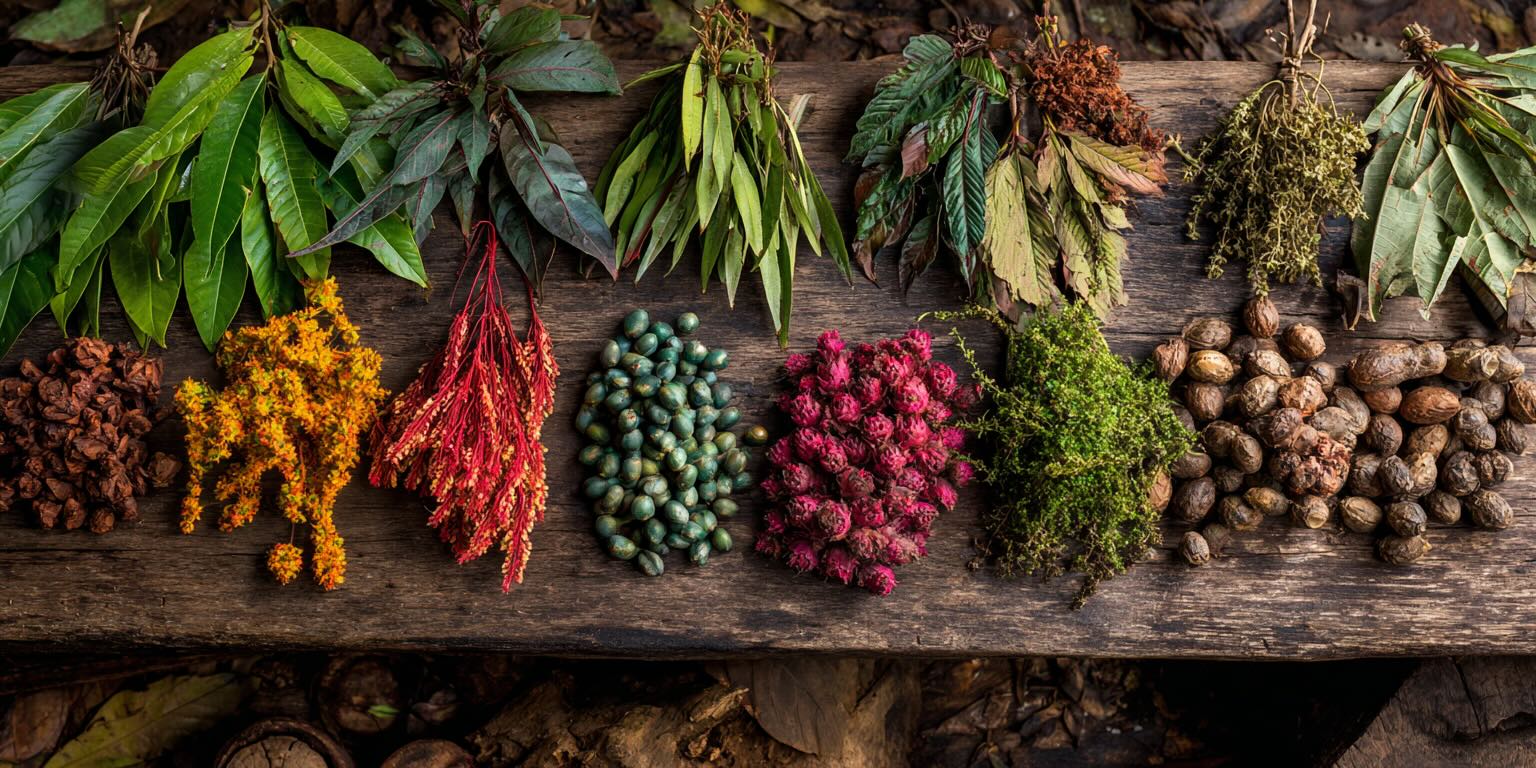
Herbal formulas bring together roots, leaves, fruits, and barks into mixtures that are greater than the sum of their parts. They reflect how the body actually functions — in networks, not in silos.
And maybe that’s the most important lesson. Health isn’t about controlling one problem. It’s about rebalancing the whole terrain. The wisdom of the forest reminds us: real healing rarely comes from just one tree. It comes from the whole canopy, working together.