

MANAYUPA
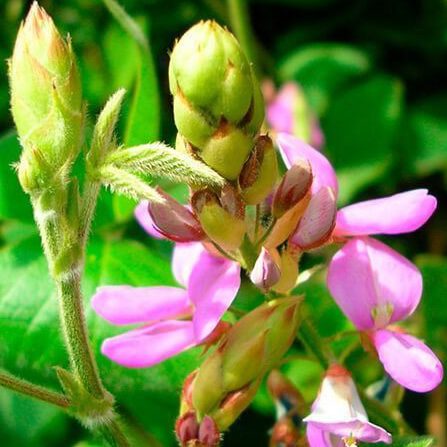
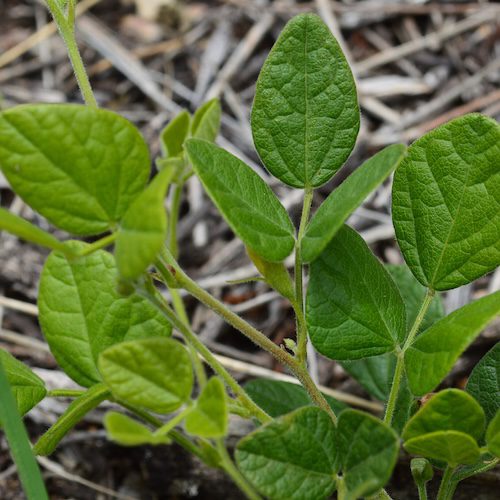
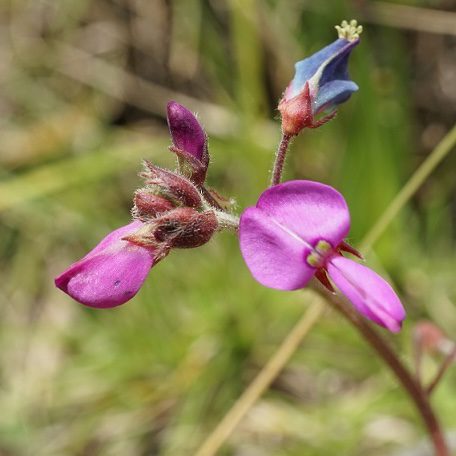
Botanical name:
Desmodium molliculum (also Desmodium adscendens)
Alternative names:
Pata de perro, Pati perro, Allqupachaquin, Pie de perro, Runa manayupana, Pega pega, Allco pachque, Amor seco, Carrapicho, Hierba de infante
Main indications:
jaundice
hepatitis
asthma
bronchitis
allergies
water retention (diuretic)
epilepsy
inflammatory gynecological disorders
THIS PLANT IS PART OF THE HOJAS DEL ESPÍRITU ANACONDA, ESPÍRITU DEL LAGO, TAPIR VERDE AND LLUVIA SAGRADA HERBAL FORMULAS.
Short characteristics:
Manayupa (Desmodium molliculum) is a highly valued Amazonian plant renowned for its broad medicinal and healing properties. This is also the reason the plant is used in more herbal formulas than any other Amazonian botanical. It is considered to be one of the “great” herbs along with Cat’s Claw and Lapacho/Tahuari.
Traditionally, indigenous communities use decoctions of its leaves and stems to support the health of the digestive and respiratory systems. It has anti-inflammatory, antispasmodic, and analgesic effects, helping to alleviate stomach pains, intestinal inflammation, and respiratory conditions such as coughs and bronchitis. Manayupa also exhibits detoxifying properties, aiding in the elimination of toxins and reducing fever. Its traditional use extends to healing wounds, reducing swelling, and supporting overall recovery, making it a versatile herbal remedy for maintaining internal balance and promoting general well-being. Scientific studies are exploring its bioactive compounds, which may support its healing effects through anti-inflammatory and antimicrobial actions.
The usual way of use:
Place 2-3 spoons of dried plant in one liter of boiling water, then simmer it gently for 30 minutes. After filtering, the decoction should be consumed throughout the day.
Alternatively, pour boiling water over the dried plant parts and let it steep for ten minutes before drinking.
Powdered herbal extract, whether in capsules or in powder form, should be taken twice a day. The dose depends on the potency—please follow the instructions on the label or consult your health practitioner for guidance.
Composition
Manayupa’s therapeutic properties can be attributed to its rich phytochemical profile:
- Flavonoids: Including quercetin, orientin, vitexin, and other flavonoid derivatives, which contribute potent antioxidant and anti-inflammatory effects.
- Alkaloids: Such as desmodine and related compounds, which may help modulate immune responses and act as antispasmodics.
- Tannins: Polyphenolic substances that have antimicrobial, anti-inflammatory, and astringent properties instrumental in tissue healing.
- Saponins: Known to support immune health and exhibit antimicrobial activity.
- Phenolic acids: Supporting detoxification and reducing oxidative stress.
The synergy among these compounds is believed to account for its broad spectrum of medicinal effects, especially its anti-inflammatory and healing capacities.
Traditional Use
For centuries, indigenous tribes in the Amazon have used Manayupa in a variety of ways:
- Treatment of digestive ailments: Decoctions of leaves and stems are traditionally employed to soothe stomach pains, treat indigestion, and combat intestinal inflammation.
- Respiratory health: Its expectorant and anti-inflammatory properties are used to ease coughs, bronchitis, and other respiratory conditions.
- Fever and detoxification: The herb is used to reduce fever and help eliminate toxins from the body, supporting overall detoxification.
- Wound healing: Topically applied preparations are believed to accelerate the healing of cuts, wounds, and skin inflammations.
- Anti-inflammatory remedy: It’s used to reduce swelling and inflammation associated with infections or physical injuries.
In ancestral practices, Manayupa is often part of herbal formulas to restore internal balance, support immune function, and promote recovery from illness.
Precautions and Possible Interactions
Although Manayupa is a natural, traditional remedy, it’s important to approach its use carefully:
- Limited scientific data: There are no extensive clinical trials, so safety and dosage guidelines are primarily based on traditional use and preliminary research.
- Potential allergic reactions: As with any plant, some individuals may react allergically; skin irritation or gastrointestinal discomfort can occur.
- Drug interactions: Since it exhibits anti-inflammatory and antimicrobial properties, it could potentially interfere with medications such as blood thinners, antimicrobials, or immunosuppressants. Consult a healthcare professional before use, especially if you are on medication or have chronic health conditions.
- Pregnancy and breastfeeding: No conclusive safety data exist; pregnant or nursing women should seek medical advice prior to usage.
Overall, moderation and consultation with a knowledgeable herbalist or healthcare provider are recommended.
Available Scientific Studies
Although scientific research on Manayupa is still emerging, some studies offer preliminary insights:
“Desmodium molliculum (Kunth) DC (Fabaceae); Ethnobotanical, phytochemical and pharmacological profile of a Peruvian Andean plant”
Authors: K. Olascuaga‑Castillo, S. Rubio‑Guevara, J. E. Valdiviezo‑Campos, C. Blanco‑Olano
Overview: Comprehensive review summarizing traditional uses (e.g., healing, antiasthmatic, anti‑inflammatory, hepatoprotective, antibacterial, antioxidant, contraceptive) along with phytochemical insights and pharmacological observations.
Link: https://ethnobotanyjournal.org/index.php/era/article/view/1811 (ethnobotanyjournal.org)“Desmodium molliculum (Kunth) DC., an Andean medicinal plant: DNA barcoding and HPLC fingerprint for species discrimination and evaluation of its pharmacological potential”
Authors: E. Peñaherrera, J. Sarmiento‑Pacurucu, E. Santos‑Ordóñez, et al.
Overview: Recent study (2025) using DNA barcoding and HPLC profiling to authenticate the species and assess its pharmacological potential, including antioxidant compounds like apigenin derivatives.
Link: https://www.frontiersin.org/journals/plant-science/articles/10.3389/fpls.2025.1612556/full (frontiersin.org)“Phytochemical Screening and Antiinflammatory Activity of the Extract from the Leaves of Desmodium molliculum (Kunth) DC”
Authors: Karyn Olascuaga‑Castillo, Olga Castillo‑Medina, Marleni Villacorta‑Zavaleta, Deyber Lopez, Dan Altamirano‑Sarmiento, Elena Caceres‑Andonaire, Maria Llontop, Fatima Malca, Sebastian Noe, Cyntia Blanco‑Olano
Overview: Experimental study demonstrating significant anti‑inflammatory effects in a rat model of carrageenan-induced acute inflammation, alongside phytochemical profiling of the leaf extract.
Link: http://www.phcogj.com/v15/i5 (Article available online) (phcogj.com)“Functional Properties and Acceptability of Potentially Medicinal Tea Infusions Based on Equisetum arvense, Desmodium molliculum, and Mentha piperita”
Authors: Johonathan Salazar‑Campos, Orlando Salazar‑Campos, Osmar Gálvez‑Ruiz, Herlita Gavidia‑Chávez, Mery Gavidia‑Chávez, Lorena Irigoin‑Guevara, Jesús Obregón‑Domínguez
Overview: Assessed functional properties (polyphenols, flavonoids, antioxidant capacity) and palatability of herbal tea blends that include D. molliculum. Demonstrated high antioxidant content when D. molliculum is the predominant component.
Link: https://pubmed.ncbi.nlm.nih.gov/38188091/ (pubmed.ncbi.nlm.nih.gov)