Contact Info

Ayahuasca

The Truth About Ayahuasca

The Truth About Ayahuasca: Understanding a Sacred Amazonian Medicine

In recent decades, Ayahuasca has emerged from the depths of Amazonian shamanic traditions to become a global phenomenon. It’s often hailed as a powerful plant medicine capable of unlocking spiritual realms, healing deep-seated trauma, and transforming lives. But behind its hype lies a complex reality—one that science is only beginning to grasp, and which indigenous cultures have understood for thousands of years.

So, what is the true nature of Ayahuasca? Can it really heal cancer or resolve lifelong psychological wounds? Or is it something more subtle—a journey into the subconscious, a spiritual catalyst whose mechanisms remain largely mysterious? To answer these questions, we need to peel back the layers of myth, science, and tradition.


Ayahuasca: More Than a “Psychedelic” Brew

Many Western discussions simplify Ayahuasca as just a “psychedelic” drug—a plant mixture that causes hallucinations. While this is technically correct in terms of biochemical activity, it vastly understates its cultural, spiritual, and therapeutic significance.

The primary psychoactive component of Ayahuasca is DMT (N,N-Dimethyltryptamine)—a powerful hallucinogen present in many plants, including those that are part of the brew. In the Amazon, indigenous shamans have known for centuries that when combined with Banisteriopsis caapi (containing MAO inhibitors), DMT produces a profound altered state of consciousness—an experience they consider sacred, divine, and transformative.

Labeling Ayahuasca merely as a “psychoactive drug” misses its essence: an entheogen—a substance that induces spiritual or mystical experiences, awakening a sense of connection with ancestors, spirits, or divine forces. To indigenous peoples, Ayahuasca is not just a plant cocktail; it’s a sacred medicine, a bridge between worlds.

Don Miguel, a shaman from Colombia, once told me:
“Ayahuasca is not only for seeing colors or visions; it is a teacher, a spiritual guide. It shows us the truths hidden in our hearts and in the universe.”

This perspective—that Ayahuasca facilitates an inner journey—is deeply embedded in the tradition and is not reducible to neurochemistry alone.


Science: The Limitation of Our Understanding

Despite the surge of scientific interest, our understanding of Ayahuasca remains limited. We know that DMT binds to serotonin receptors, particularly 5-HT2A, leading to altered brain activity. Neuroimaging studies show increased connectivity between different brain regions, which correlates with visualizations, emotional catharsis, and altered perception.

However, we do not understand why these experiences often feel more like encounters with divine beings, ancestral spirits, or alternate realities rather than merely hallucinations. Many users report profound insights, feelings of unity, encounters with entities, or the perception of past lives—experiences that challenge reductionist explanations.

Dr. Rick Strassman, a pioneer in DMT research, observes:
“While we can measure brain activity and identify some neurochemical correlates, the subjective, spiritual quality of these experiences remains elusive to current science. We see the effects, but not the meaning.”

In fact, claims that science fully explains Ayahuasca’s effects are premature and, some argue, misleading. Scientific data can describe certain mechanisms but cannot explain the deeply personal visions or messages that many say are meaningful or transformational.

To claim that science “knows” how Ayahuasca works is to overlook the richness of the human conscious experience. Many researchers agree: science provides pieces of the puzzle, but not the full picture.


The Enigma of Healing and Transformation

What about the reported healing properties of Ayahuasca? Many indigenous communities recount stories of illnesses—cancer, depression, addiction—being healed after ceremonial use. Western researchers are now investigating these claims, with studies showing reductions in depression and anxiety following Ayahuasca sessions.

But how does healing occur? Scientific explanations often cite neuroplasticity, emotional catharsis, or psychological breakthrough. Nevertheless, many profound healings remain elusive to our understanding.

For example:
“People who undergo Ayahuasca ceremonies often describe an experience of release—seeing their trauma, forgiving themselves, or gaining clarity. These are not just biochemical effects; they are spiritual and emotional resets.” (Carl et al., 2018)

Yet, these effects are not yet scientifically proven as cures for disease. Instead, they appear as catalysts for change, support for mental health, or catalysts for perspective shifts. Until we have measurable, scientifically validated explanations for these profound experiences, we must acknowledge that much of Ayahuasca’s power lies beyond current empirical understanding.

By David Alner

The most important healing occurs not just within the body or brain, but in the soul—a realm science has yet to fully unlock.

Why the Mystery Matters

This gap between traditional knowledge and scientific explanation is not just a matter of academic curiosity—it affects how we perceive and use Ayahuasca.

Indigenous cultures have long regarded Ayahuasca as a sacred plant teacher. They do not claim it’s a cure-all but see it as a spiritual ally that guides people to heal wounds on many levels—physical, emotional, and spiritual. Their trust is rooted not only in centuries of experience but also in the outcomes of countless ceremonies.

From a scientific view, many researchers caution against hasty claims:
“Until rigorous clinical trials and biochemical models explain how and why Ayahuasca produces such profound psychological and physical effects, any suggested health claims remain speculative.” (Johnson & McKenna, 2019)

Practitioners and users who approach Ayahuasca with respect and cultural humility understand that its most potent effects are often spiritual or psychological—things that don’t lend themselves easily to laboratory tests but are undeniable to those who experience them.

Ayahuasca

The Role of Ritual and Intention

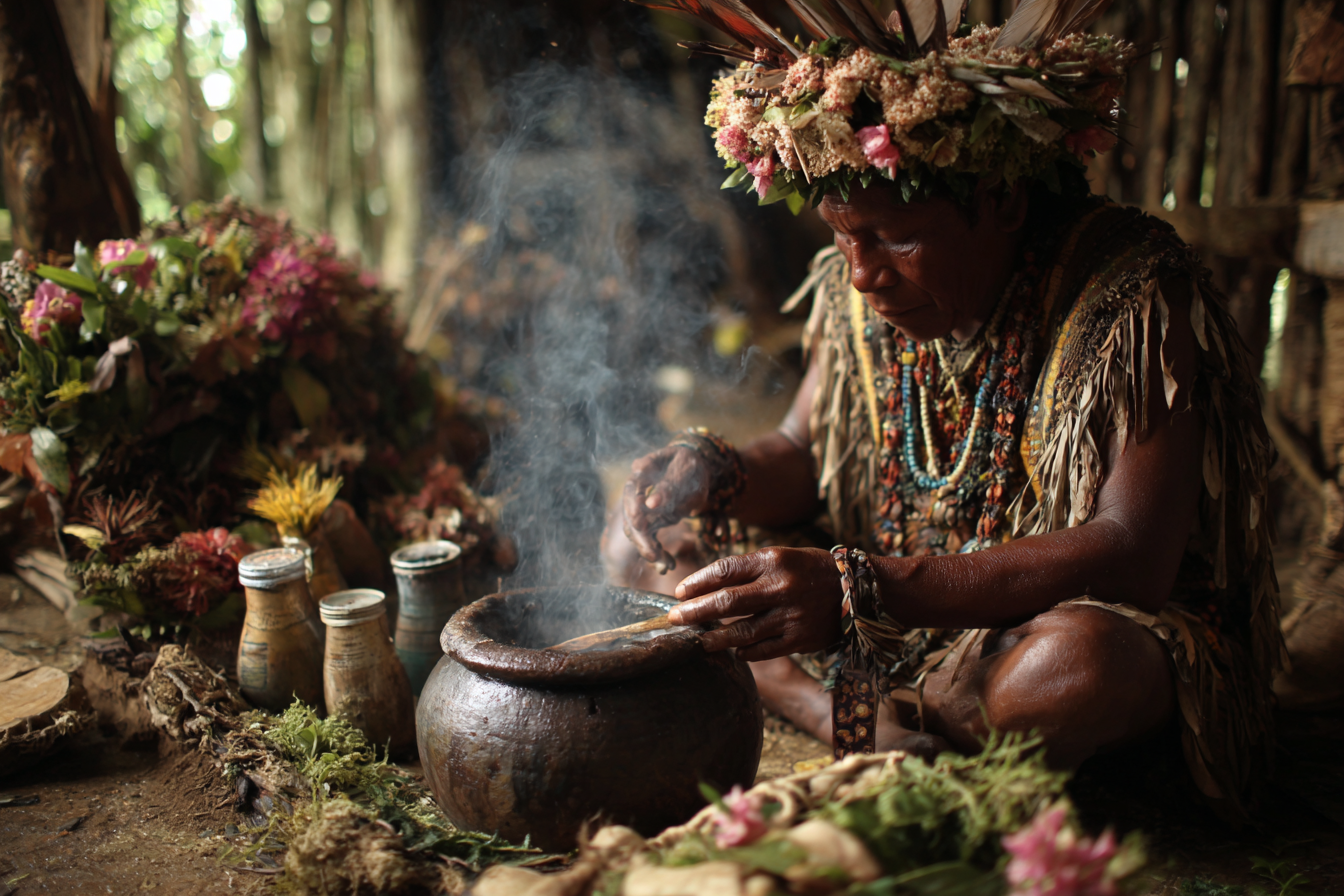
Another critical factor is that in indigenous traditions, Ayahuasca is not just consumed randomly; it’s part of a ritual environment led by experienced shamans. The ritual, songs (Icaros), prayers, and intention all shape the experience.

Research suggests that setting and expectation profoundly influence psychedelic experiences (Carhart-Harris et al., 2018). This means that the same plant brew can lead to vastly different outcomes depending on cultural context, personal intention, and group energy—all elements that science is only beginning to explore.


Looking Forward: Respecting the Ancient and Embracing the Unknown

The future of Ayahuasca research lies in bridging traditional knowledge with rigorous scientific inquiry—without destroying the cultural roots or dismissing spiritual experiences as mere hallucinations.

Indigenous communities hold the key to understanding Ayahuasca’s full potential, but their rights and knowledge must be respected and protected. The danger lies in commercializing and simplifying Ayahuasca into a “cure” or “drug” bypassing the cultural context that gives it power.

As the philosopher and ethnobotanist Mark Plotkin states:
“The plants of the rainforest are not just molecules; they are part of a worldview—an entire philosophy of health, healing, and harmony. We will never truly understand their power until we listen with humility.”


The Mystery is Part of the Medicine

In the end, Ayahuasca remains a profound mystery—an ancient teacher whose effects are felt deeply but not fully understood scientifically. Its ability to promote healing, insight, and transformation may never be entirely reducible to biochemistry or brain activity.

What we do know is that Ayahuasca’s true power stems from respect, intention, and the cultural frameworks that have nurtured it for centuries. Until science catches up, we must honor the wisdom of indigenous traditions and approach this sacred medicine with humility and reverence.

Because, perhaps, the most important healing occurs not just within the body or brain, but in the soul—a realm science has yet to fully unlock.

Leave a Reply