

LAPACHO (PAU D’ARCO)
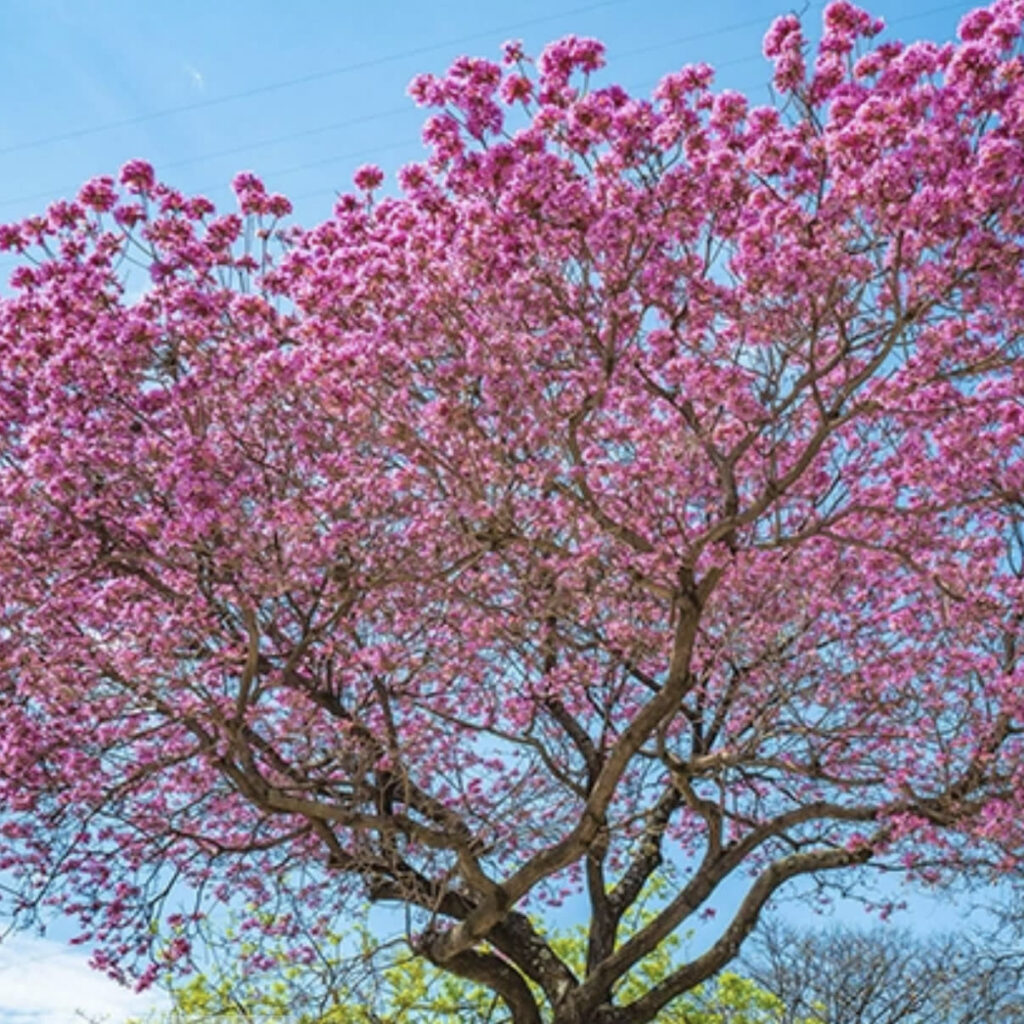
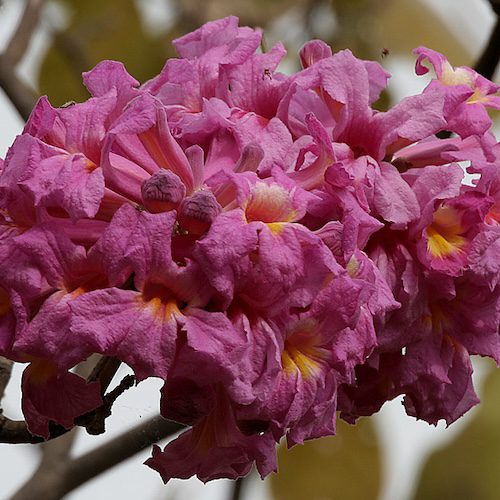
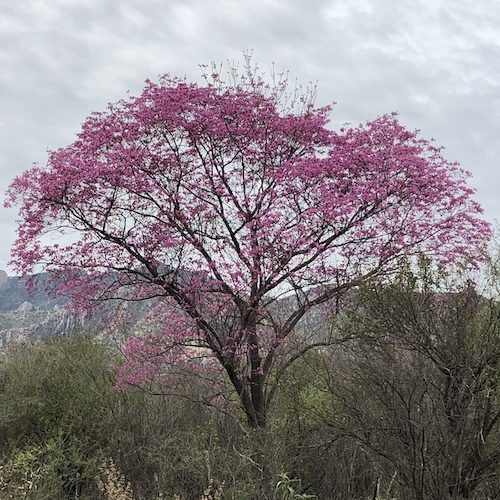
Botanical name:
Handroanthus impetiginosus (formerly Tabebuia impetiginosa). Pink / rose pau d’arco. Not the yellow sister.
Alternative names:
Pau d’arco, tajibo, ocobo, cortez negro, xmaculís, maculís, lapacho
Main indications:
traditional bark tea for infections and fever
folk skin and fungal complaints
inflammatory and joint discomfort, in folk use
gut and respiratory comfort, in folk use
Pink tree. Yellow tahuari is Handroanthus serratifolius — a sister, not a synonym.
THIS PLANT IS MOSTLY INTERCHANGEABLE WITH TAHUARI AND CAN BE PART OF THE MEZCLA JAGUAR AND ESENCIA DE MARIPOSA AZUL HERBAL FORMULAS.
Short characteristics:
Lapacho is the pink inner bark of Handroanthus impetiginosus, a tall South American tree of dry forest, Andean foothills, and the Amazon fringe. The yellow sister sold as tahuari is H. serratifolius — see tahuari. Folk teas use this bark for infections, fever, skin, joints, and as a bitter tonic. Those are traditional uses. They may be named. They are not cures.
The bark is known for naphthoquinones: lapachol, β-lapachone. Gómez Castellanos reviewed that chemistry. Zhang 2020 and Ryan 2021 are papers on this pink species or its quinones — lab and pharmacology, including harshness at high dose. An old NCI interest in lapachol did not produce a licensed cancer drug.
A short course is the usual habit. This site sells nothing.
The usual way of use:
Use 1–3 spoons of bark in just under a liter of cold water; cook 20 minutes after the boil. Drink a glass three times a day, half an hour before or after meals.
Powdered extracts follow the label. This site sells nothing.
WARNING: Naphthoquinones can be harsh on the gut and, at high dose, the system. Traditional habit is a course, not a year-round tea — three months on, at least a month off, is the old shop rule. Not a tumor protocol. Not for pregnancy.
Composition
Inner bark: lapachol, β-lapachone, related naphthoquinones, plus ordinary phenolics. Those quinones are bioactive in dishes and also the reason a long daily drink is a bad idea. Do not swap in papers on the yellow tree as if they were this bark.
Traditional use
Folk South American bark tea for infections, fever, skin, and recovery. Traditional talk has named cancer; that is folk talk, and the clinical file never made lapachol a chemotherapy. Sister page: tahuari. House formulas that mention pau d’arco-type barks should still name the species.
Precautions
Gut upset, anticoagulant talk, pregnancy: stay out. Three-month cap is prudence, not a superstition. Bohrium and shop PDFs are not studies.
Opened studies
Gómez Castellanos et al. (2009). Red Lapacho (Tabebuia impetiginosa)—a global ethnopharmacological commodity?. Pink-species review. PMID 18992801.
Zhang et al. (2020). β-Lapachone work on Handroanthus / Tabebuia quinones. Pink-species / quinone paper; not a human cancer trial. PMC7571111.
Ryan et al. (2021). Lapachol / β-lapachone pharmacology. Opened via PMC; lab pharmacology, not a clinic protocol. PMC7970899.