

TAHUARI (PAU D’ARCO AMARELO)
Botanical name:
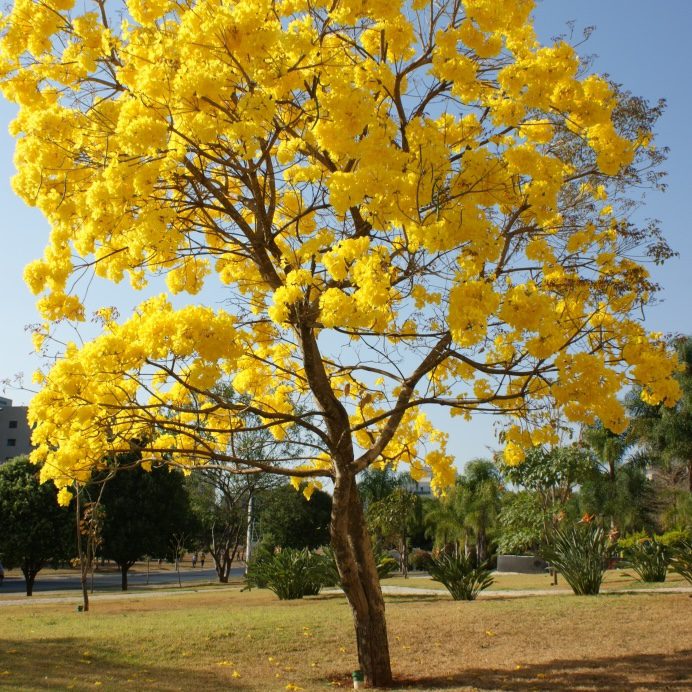
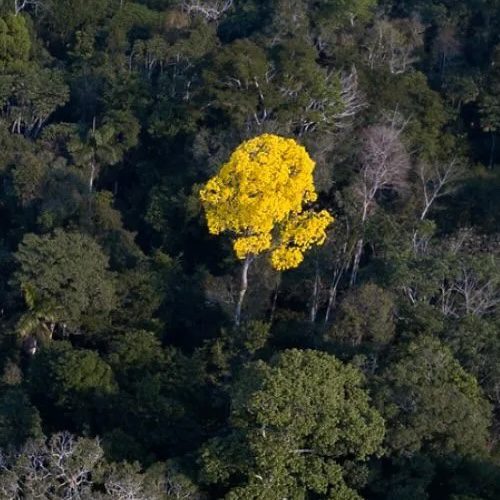
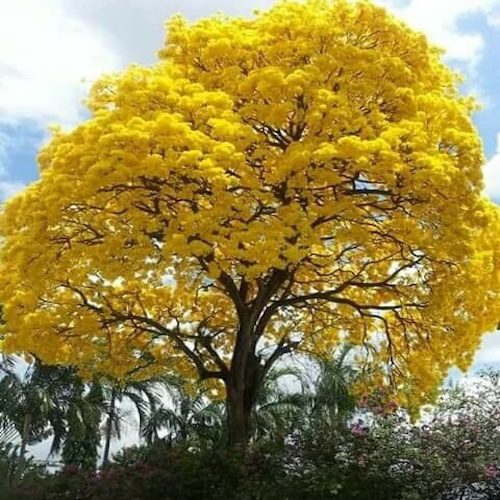
Handroanthus serratifolius (formerly Tabebuia serratifolia). Not “serratofolius.” Yellow pau d’arco.
Alternative names:
Yellow lapacho, pau d’arco amarelo, yellow ipê, ipê-amarelo, tawari, tahuari
Main traditional uses:
traditional bark tea for stubborn infections and fever
colds and flu, in folk use
skin and fungal complaints, in folk use
general weakness after illness, in folk use
Not listed as a cancer or AIDS medicine. Pink sister: lapacho.
Short characteristics:
Tahuari is the yellow-flowered pau d’arco, Handroanthus serratifolius. Pink lapacho is H. impetiginosus. They look alike and share lapachol-type quinones. They are sister trees, not one interchangeable drug. A paper on the pink tree is not proof for this one. Link: lapacho.
The inner bark is the part used: bitter decoctions for infections, fever, and recovery. Species-specific human data for tahuari is thin. Zhang 2020 is a pink-lapacho / quinone paper — it does not belong here as if it were tahuari. A pulse-diagnosis paper (PMID 28246538) does not belong here at all.
This tree does not contain harmine. Those alkaloids belong to other plants. It is not an AIDS medicine. This site sells nothing.
The usual way of use:
Use 1–3 spoons of bark in just under a liter of cold water; cook 20 minutes after the boil. Drink a glass three times a day, half an hour before or after meals.
This site sells nothing.
WARNING: Same quinone harshness as other pau d’arco barks. Three months on, at least a month off. Not a cancer or AIDS protocol. Not for pregnancy. Do not treat pink-lapacho papers as this species.
Composition
Yellow inner bark, naphthoquinones in the same chemical family as pink lapacho. Exact profiles are not interchangeable. I will not paste a pink-tree citation list onto this page.
Traditional use
Amazonian and South American folk bark tea for infection, fever, skin, and recovery after illness. Traditional cancer and AIDS talk exists in the trade; it is folk talk. Sister: pink lapacho. House formula: Esencia de Mariposa Azul.
Precautions
Gut and liver caution at high dose. Pregnancy out. No species-specific human trial is cited here because the opened set did not include one. Do not recycle Zhang 2020, Costa/PMC5329664, or PMID 28246538 as tahuari evidence.
Opened studies
Taxonomy note (—). Accepted name Handroanthus serratifolius (formerly Tabebuia serratifolia). No species-specific human trial was opened for this rewrite. Pink-lapacho papers are not reused as proof.