

SUMA (BRAZILIAN GINSENG)
Botanical name:
Pfaffia paniculata (trade). Accepted name often Hebanthe eriantha / H. erianthos. Not Panax.
Alternative names:
Suma, Brazilian ginseng, para toda, corango-açu
Main indications:
folk stamina tonic
folk libido talk
adaptogen marketing — outruns human trials
THIS PLANT IS PART OF THE CORAZÓN DEL PUMA AND ESENCIA DE MARIPOSA AZUL HERBAL FORMULAS.
Short characteristics:
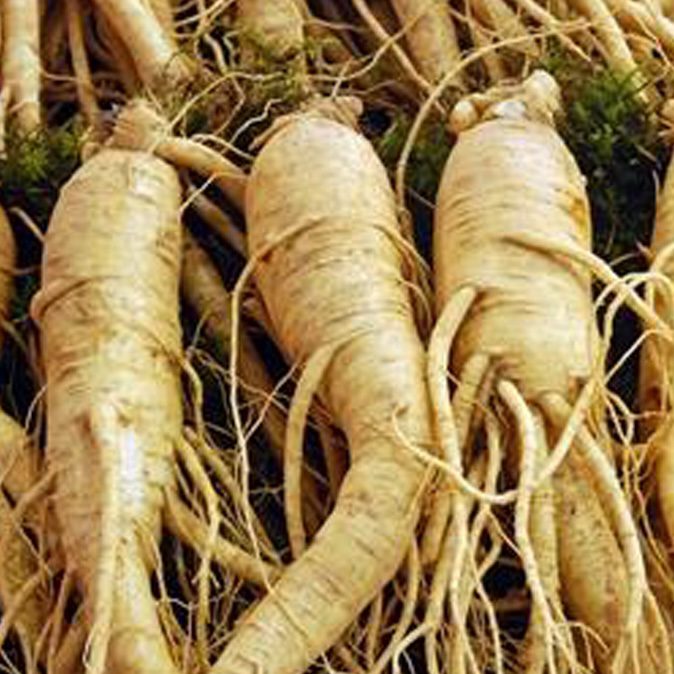
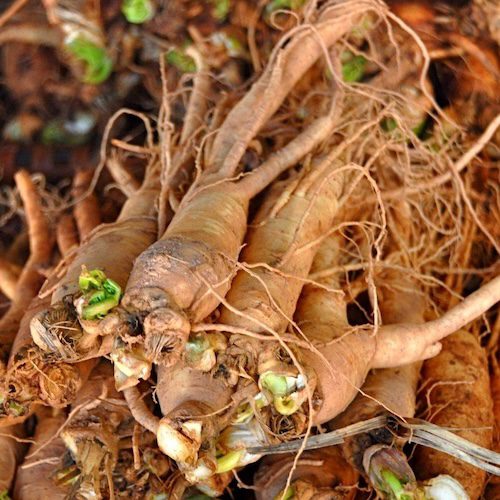
Suma is a South American amaranth-family root sold as Brazilian ginseng. The trade name is Pfaffia paniculata; many botanists now file it under Hebanthe eriantha. It is not Panax. “Para toda” — for all things — is folklore, not a data set.
People take a bitter decoction or a powder as a stamina and libido tonic. Adaptogen marketing outruns trials. Costa 2015 is a rat colitis model. Miranda 2024 is in-vitro biofilm work with dose-dependent cell toxicity. Neither is a sickle-cell or cancer drug.
Used in Esencia de Mariposa Azul and Corazón del Puma. This site sells nothing.
The usual way of use:
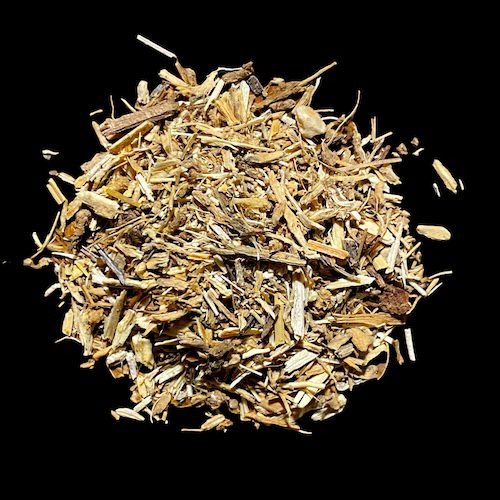
Bitter root decoction (about 10 minutes) or, more often, powder. Three cups of the tea is the old shop line; most people use powder because of the taste.
This site sells nothing.
WARNING: Not a hormone, sickle-cell, or cancer drug. Limited human safety data. Pregnancy unknown.
Composition
Pfaffic acid and saponins appear in the Pfaffia literature. Ecdysteroid talk is often P. glomerata confusion — say so, do not copy it as this root.
Traditional use
South American folk tonic. House formulas: Esencia de Mariposa Azul, Corazón del Puma.
Precautions
Human file is thin. Not a cancer-preventive because a mouse paper said so. Not sickle-cell. Pregnancy unknown.
Opened studies
Costa et al. (2015). Pfaffia paniculata in rat TNBS colitis. International Immunopharmacology. Rat model, not a human IBD drug. PMID 26202807 · doi:10.1016/j.intimp.2015.07.002.
Miranda et al. (2024). Pfaffia / Hebanthe extracts versus biofilms. Microorganisms. In-vitro; dose-dependent cell toxicity. PMID 38930547 · doi:10.3390/microorganisms12061165.