

SAN PEDRO
Botanical name:
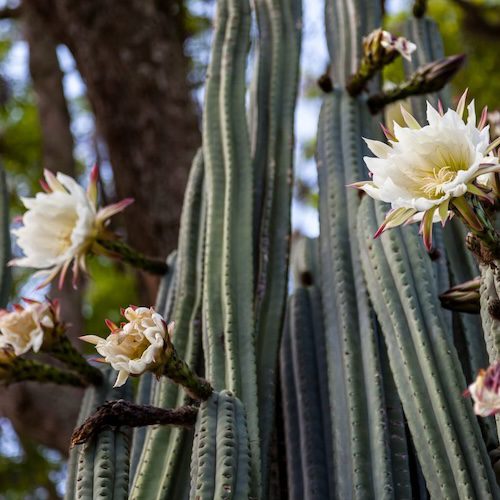
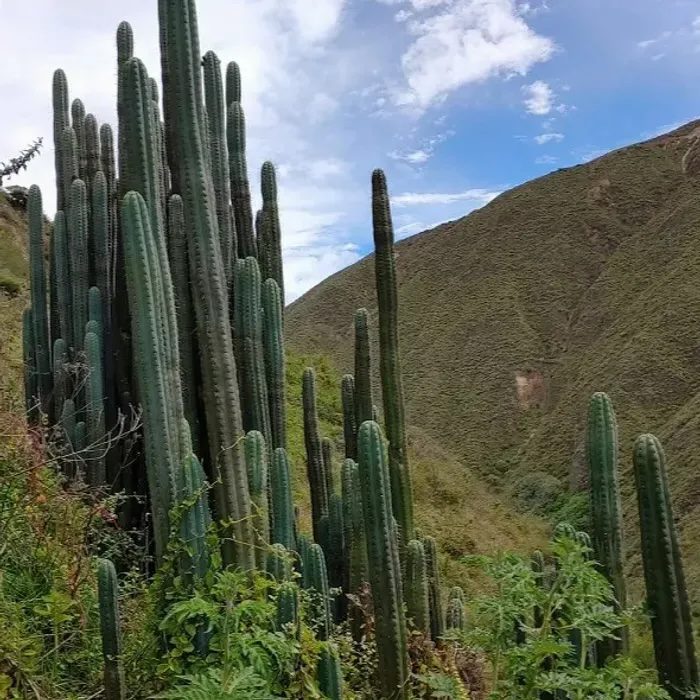
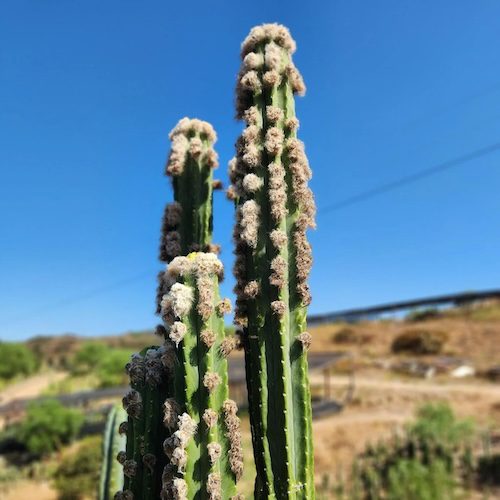
Echinopsis pachanoi / Trichocereus pachanoi (huachuma). Closely related columnar cacti (T. peruvianus, T. bridgesii) are used in the same Andean trade. This is not an Amazonian jungle cactus.
Alternative names:
Huachuma, wachuma, San Pedro, gigantón
Main indications:
Andean ceremonial cactus (mescaline)
folk joint and “bad wind” talk, in highland use
not a kitchen vegetable and not an Amazonian master plant
Short characteristics:
San Pedro is an Andean columnar cactus, not a lowland jungle vine. The usual botanical name in the literature is Echinopsis pachanoi (also Trichocereus pachanoi). Highland curanderos in northern Peru call it huachuma. Related species in the same trade carry mescaline too; Ogunbodede and colleagues measured that alkaloid across San Pedro-type cacti.
The ceremonial drink is a long, bitter decoction of green tissue. Smaller, non-visionary doses turn up in folk talk about rheumatism and “bad winds.” That is highland practice. Mixing the Andes with the Amazon on this page was a mistake. It is not a cardiac drug and not a detox protocol.
Mescaline is a controlled substance in many countries. This site sells nothing.
The usual way of use:
Thick ceremonial decoction of the green cactus flesh, drunk under an Andean curandero. Not a salad.
This site does not sell cactus and does not publish a dose chart.
WARNING: Mescaline is psychoactive and often controlled. Not for pregnancy, psychosis, or self-experiment. Check the law where you live.
Composition
The active alkaloid of interest is mescaline. Amounts vary by species, clone, and how much green tissue you cook. Related columnar cacti in the San Pedro group are not chemically identical. Do not treat a shop label as a lab report.
Traditional use
Coastal and highland northern Peru is the ceremonial center of gravity, not the Amazon basin. Huachuma mesas are a different lineage from ayahuasca. Folk use of weaker decoctions for joint pain and “aire” sits beside the visionary drink; they are not the same session.
Precautions
Psychoactive dose means nausea, tachycardia, and a long night. Controlled-substance law applies in many places. Do not stack it with other serotonergic drugs on a guess. This site sells nothing.
Opened studies
Ogunbodede et al. (2010). New mescaline concentrations from 14 taxa/cultivars of Echinopsis spp. (Cactaceae) (“San Pedro”) and their relevance to shamanic practice. Journal of Ethnopharmacology. Chemistry of San Pedro-type cacti, not a clinical trial. PMID 20637277 · doi:10.1016/j.jep.2010.07.021.