

PASSIFLORA
Botanical name:
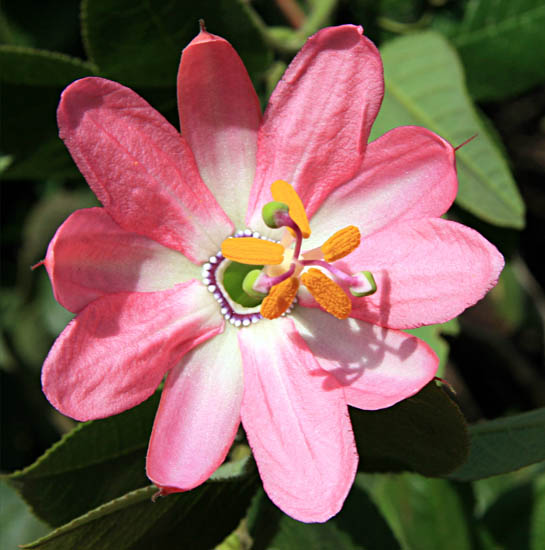
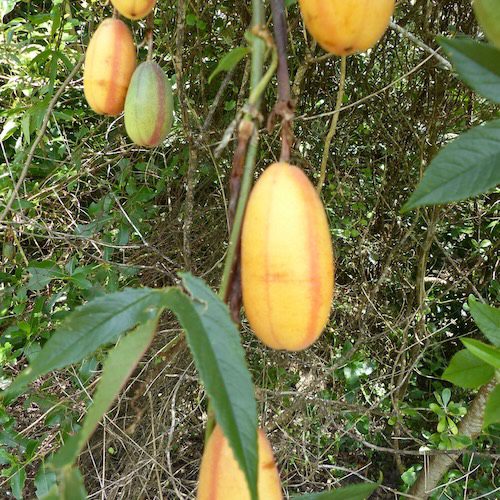
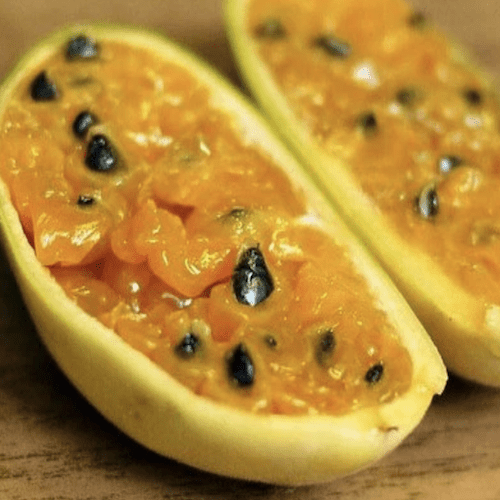
Passiflora tripartita var. mollissima
Alternative names:
Curuba, Tumbo, Purush, Poro poro
Main indications:
Anxiety and Nervous Disorders
Insomnia and Sleep Disorders
Headaches and Head Pain.
Menstrual and Hormonal Disorders
Epilepsy, Seizures, and Convulsions
Respiratory Conditions
Pain and Inflammation
THIS PLANT IS PART OF THE MÍSTICO DEL RANA DORADA AND HOJAS DEL ESPÍRITU ANACONDA HERBAL FORMULAS.
Short characteristics:
Passionflower (Passiflora spp.), especially Passiflora incarnata and Passiflora edulis, has been cherished for centuries in indigenous Amazonian and Latin American healing traditions.
If the words “passionflower” and “passion fruit” sound familiar to you, it is because the plant has been introduced to Europe centuries ago by Spanish conquistadores and has been widely used in the West ever since.
Recognized for its calming and soothing effects, this tropical vine is used extensively to promote mental and emotional balance, as well as for its physical healing properties. Rich in flavonoids, alkaloids, and phenolic acids, passionflower exerts multiple therapeutic actions, including reducing anxiety, calming the nervous system, relieving pain, and supporting sleep. Traditionally, decoctions of leaves or flowers have been used to treat headaches, neuralgia, menstrual cramps, and nerve tension. Scientific studies have validated many of these applications, demonstrating that passionflower contains compounds such as harmane alkaloids that provide anxiolytic and sedative effects, and that extracts can act as natural pain relievers and muscle relaxants. Its broad-spectrum pharmacological effects—including anti-inflammatory, antispasmodic, and calming actions—make passionflower a key herb in holistic health practices worldwide. Modern use often includes herbal teas, tinctures, and supplements to manage insomnia, stress, and nervous disorders, with a strong safety profile indicating it is suitable even for children and pregnant women, although it may cause drowsiness or a tranquilizing effect.
The usual way of use:
The fruit is eaten fresh as functional food. For medicinal purposes, decoction from leaves and powdered form of dried fruit are usually used.
Powdered herbal extract, whether in capsules or in powder form, should be taken twice a day. The dose depends on the potency—please follow the instructions on the label or consult your health practitioner for guidance.
Composition
The medicinal effects of passionflower stem from its diverse phytochemicals:
- Alkaloids: Harmane, harmine, and other β-carbolines, known for their sedative and anxiolytic properties.
- Flavonoids: Such as quercetin, rutin, and vitexin, which provide antioxidant and anti-inflammatory effects, supporting cellular health and reducing oxidative stress.
- Phenolic acids: Including chlorogenic acid, contributing to anti-inflammatory and hepatoprotective actions.
- Vitamins and other phytochemicals: Some species contain small amounts of vitamin C and other antioxidants supporting immune health.
The combination of these active compounds gives passionflower its ability to balance the nervous system and provide calming effects.
Traditional Use
For centuries, indigenous Amazonian tribes and regional herbalists have used passionflower for a broad array of health conditions:
- Anxiety and Nervousness: Decoctions of leaves and flowers have been used as mild sedatives to calm agitation, nervous tension, and anxiety.
- Insomnia and Sleep Disorders: Passionflower’s calming properties support restful sleep, making it a popular remedy for insomnia.
- Headaches and Neuralgia: It has traditionally been used to relieve tension headaches, migraine, and nerve pain.
- Menstrual and Gynecological Issues: It supports regulation of menstrual cycles and alleviates premenstrual symptoms.
- Digestive and Respiratory Ailments: The herb is used to soothe gastrointestinal cramps, and its expectorant properties help relieve coughs and bronchitis.
- Stress and Mood Support: Passionflower’s calming effects are used to improve overall mood, reduce stress, and promote emotional balance.
Herbal infusions or tinctures prepared from the leaves and flowers are commonly used in rituals and daily health maintenance.
Precautions and Possible Interactions
While passionflower has been used safely for centuries, modern research highlights some precautions:
- Sedative effects: Since it induces relaxation and drowsiness, it can enhance the effects of prescription sedatives or anxiolytics, potentially leading to excessive sedation.
- Pregnancy and breastfeeding: Limited data exist on safety during pregnancy; thus, pregnant or nursing women should consult healthcare providers before use.
- Drug interactions: Passionflower may interfere with medications metabolized by the liver, including antidepressants, sedatives, or blood-thinning drugs.
- Allergic reactions: Rarely, individuals may experience allergic responses such as skin irritation or respiratory issues.
The herb should be used with caution, especially when combined with pharmaceutical sedatives or in individuals with underlying health conditions.
Available Scientific Studies
Recent scientific research supports many of passionflower’s traditional uses:
1. “Chemical Compositions, Pharmacological Properties and Medicinal Effects of Genus Passiflora L.: A Review”
Authors: K. Nikolova, M. Velikova, G. Gentscheva, A. Gerasimova, P. Slavov, N. Harbaliev, L. Makedonski, D. Buhalova, N. Petkova, A. Gavrilova
Overview: A comprehensive 2024 review summarizing phytochemistry, pharmacology, and therapeutic effects across the Passiflora genus—highlighting roles in neuroprotection, sleep regulation, anxiolysis, and antioxidant activity.
Link: https://doi.org/10.3390/plants13020228 Wikipedia+13ResearchGate+13PMC+13
2. “Passiflora incarnata in Neuropsychiatric Disorders—A Systematic Review”
Authors: K. Janda et al. (2020)
Overview: Reviews randomized controlled trials that show P. incarnata‘s beneficial effects for anxiety, insomnia, restlessness, and depressive states, as well as memory improvements.
Link: https://www.ncbi.nlm.nih.gov/pmc/articles/PMC7766837/ PMC
3. “Randomized, Double‑Blind, Placebo‑Controlled, Clinical Study: Passiflora incarnata Extract for Stress and Sleep Problems”
Authors: M.K. Harit et al. (2024)
Overview: Clinical trial demonstrating that P. incarnata extract significantly improved stress levels, sleep duration, and overall psychological health in stressed adults with insomnia.
Link: https://www.ncbi.nlm.nih.gov/pmc/articles/PMC11026993/ PMC
4. “Herbal Medicinal Products from Passiflora for Anxiety: A Review”
Author: L.R. Fonseca (2020)
Overview: Highlights the potential of Passiflora extracts for anxiety treatment, though medicinal product trials remain limited.
Link: https://onlinelibrary.wiley.com/doi/10.1155/2020/6598434 Wiley Online Library
5. “Phytochemistry, Nutritional Composition, Health Benefits of Passionflower (Passiflora)”
Authors: J. Zhang et al. (2023)
Overview: Reviews Passiflora’s phytochemicals, nutrition, and therapeutic properties, suggesting potential in food, medicine, and cosmetics.
Link: https://pubmed.ncbi.nlm.nih.gov/37441935/ PubMed
6. “Passiflora incarnata L.: Ethnopharmacology, Clinical Application, Safety and Evaluation of Clinical Trials”
Authors: M. Miroddi, G. Calapai, M. Navarra, P.L. Minciullo, S. Gangemi (2013)
Overview: Comprehensive review of P. incarnata, examining traditional uses, clinical evidence, and safety profiles.
Link: https://www.sciencedirect.com/science/article/abs/pii/S0378874113006983 ScienceDirect
7. “Phytochemical Profiles, Antioxidant, Antimicrobial, and Cytotoxic Activities of Passiflora caerulea L.”
Authors: Not specified (2022)
Overview: Assessment of P. caerulea’s methanolic extract revealing antioxidant, anti-inflammatory, antimicrobial, and cytotoxic effects in cell models.
Link: https://biomedpharmajournal.org/vol15no4/phytochemical-profiles-antioxidant-antimicrobial-and-cytotoxic-cell-lines-activity-of-passiflora-caerulea-l/ biomedpharmajournal.org