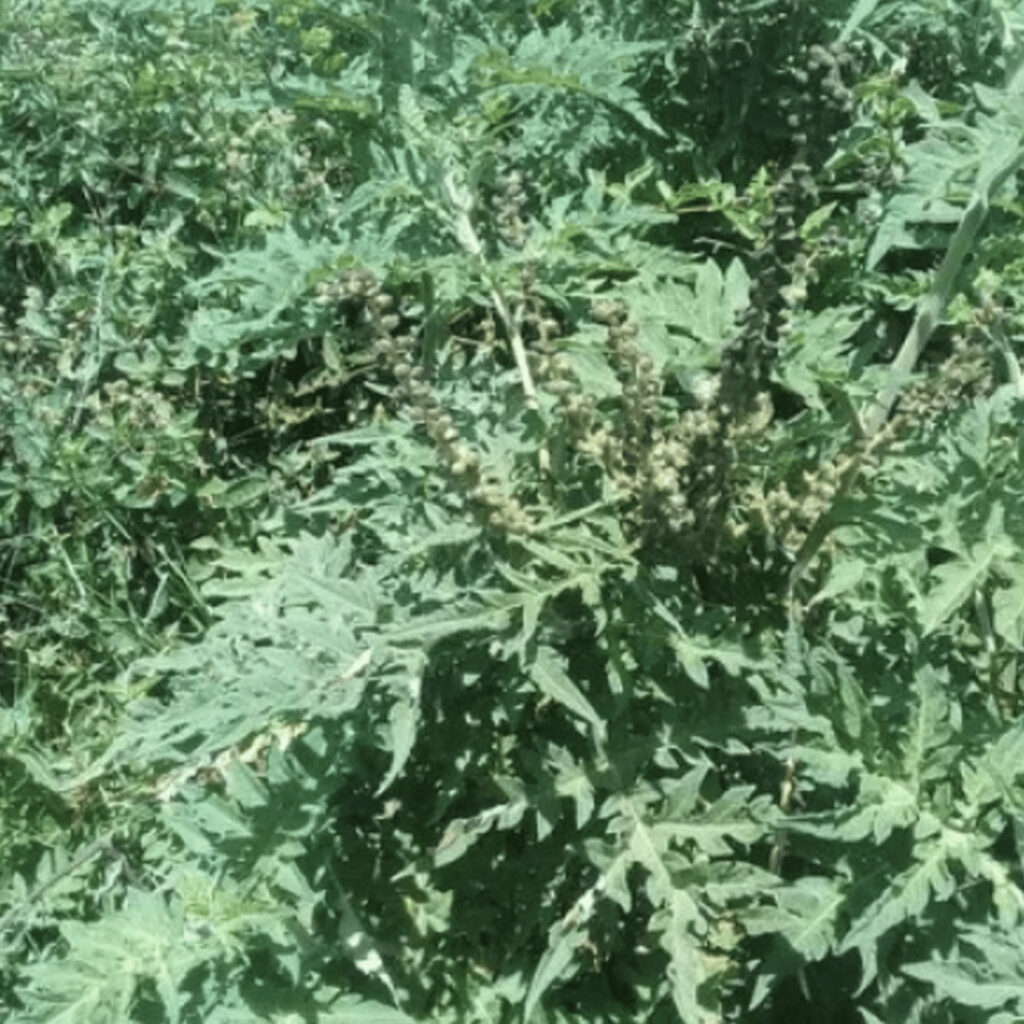
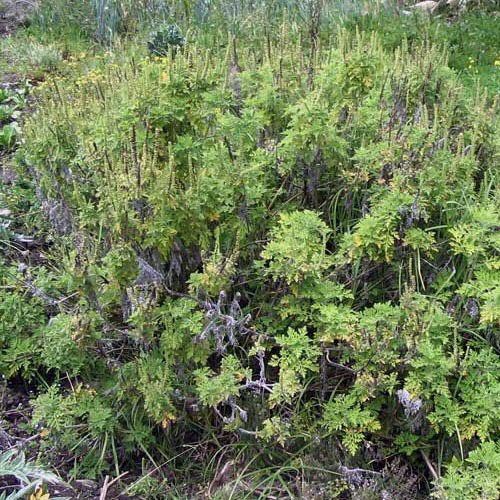
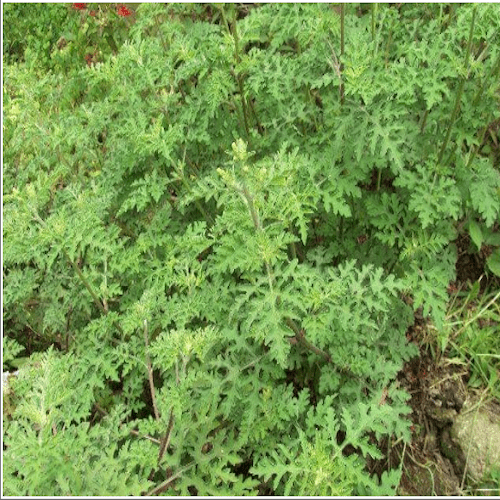
MARCO


Botanical name:
Ambrosia peruviana (also Ambrosia cumanensis)
Alternative names:
Peruvian Ragweed, Alcanfor, Altamisa, Ambrosia silvestre, Artemisa, Maki, Marrco, Marcju
Main indications:
rheumatism, arthritis, arthrosis, joint inflammation
bronchitis, asthma,
neurosis, restlessness, anxiety, migraine, headaches
normalization of menstruation, menstrual cramps
stomach pain, intestinal parasites
as a supportive agent in Parkinson’s and Alzheimer’s disease and multiple sclerosis
Short characteristics:
Marco (Ambrosia peruviana) is a traditional Amazonian herb highly valued for its medicinal properties, particularly for supporting digestive health, blood purification, and inflammation reduction. Indigenous communities have used decoctions of its leaves and stems to help alleviate stomach pains, intestinal inflammation, and parasitic infections. The plant’s bioactive compounds, including flavonoids, tannins, and phenolic acids, contribute to its antimicrobial, anti-inflammatory, and antioxidant effects. Historically, Marco is also employed to enhance overall vitality, promote detoxification of the blood and organs, and support healing processes in the body. Its wide-ranging medicinal applications reflect its importance as a natural remedy for maintaining internal balance and health in Amazonian traditional medicine.
The usual way of use:
3 to 5 grams of dried herb (one to two large spoons) should be gently cooked in about 0.7 liters of water for 7 minutes. Drink throughout the day.
Powdered herbal extract, whether in capsules or in powder form, should be taken twice a day. The dose depends on the potency—please follow the instructions on the label or consult your health practitioner for guidance.
Composition
The medicinal effects of Marco are largely due to its rich phytochemical profile:
- Flavonoids: The plant contains a significant amount of flavonoids such as quercetin and kaempferol, which are known for their antioxidant, anti-inflammatory, and antimicrobial properties.
- Tannins: These polyphenols help protect tissues, support healing, and reduce inflammation.
- Phenolic acids: Including chlorogenic and ferulic acids, supporting detoxification and reducing oxidative stress.
- Saponins: Contribute to antimicrobial activity and immune stimulation.
- Other bioactive compounds: Resins, polysaccharides, and alkaloids that work synergistically to promote internal balance and support tissue regeneration.
This potent combination makes Marco a valuable herb for supporting overall health and organ function.
Traditional Use
For generations, indigenous tribes and rainforest communities have relied on Marco in their healing practices:
- Digestive health: Decoctions from leaves and stems are used to relieve stomach pains, inflammation of the intestines, and parasitic worms.
- Blood purification: The herb is believed to detoxify the blood and support liver function, helping eliminate toxins from the body.
- Anti-inflammatory treatment: Decoctions and infusions are applied to reduce swelling, joint pain, and internal or external inflammations.
- Healing of wounds and ulcers: Topical applications are thought to promote tissue repair and fight infections.
- Overall vitality: Marco is used to support immune health, boost energy, and restore balance after illness or exposure to environmental toxins.
In traditional practices, decoctions are prepared simply by boiling the plant material, sometimes combined with other local herbs for synergistic effects.
Precautions and Possible Interactions
While Marco has long been used safely in traditional medicine, modern caution is recommended:
- Limited scientific data: There are few comprehensive clinical trials, so safety and efficacy in humans are not fully established.
- Potential allergic reactions: Sensitive individuals may experience allergic responses or skin irritations.
- Drug interactions: Due to its detoxifying and anti-inflammatory effects, Marco could potentially interfere with medications processed by the liver or affecting blood clotting.
- Pregnancy and breastfeeding: Insufficient data exist; pregnant and nursing women should consult a healthcare professional before using.
- Chronic use: As with many herbal remedies, prolonged or high-dose use should be approached cautiously and under supervision.
Always seek advice from healthcare providers when considering herbal treatments, especially if you have existing health conditions or are on medication.
Available Scientific Studies
Although research on Marco is still emerging, some studies and scientific observations support its traditional use:
**“Preformulation studies for the development of a microemulsion formulation from Ambrosia peruviana All., with anti-inflammatory effect”**
Authors: C. A. Bernal Rodríguez, Jenny‑Paola Castro, Valquíra Linck Bassani, Luis A. Franco, Yuri Palacio
Overview: Examines the stability of the ethanolic seed extract and confirms its anti-inflammatory activity in macrophage assays (NO inhibition), with potential application in topical formulations.
Link: https://doi.org/10.1590/s2175-97902023e22505 tramil.net+8SciELO+8ResearchGate+8ResearchGateStudy on larvicidal and antibacterial activity of extracts (title inferred from abstract)
Authors: Ana María Mesa, Juan P. Naranjo, Andrés Felipe Díez Mejía, Zulma Isabel Monsalve
Overview: Investigated A. peruviana extracts for larvicidal effects against Aedes aegypti and antibacterial activityagainst certain Gram-positive bacteria; found potent larvicidal efficacy and selective antibacterial inhibition.
Link: Full text available via ResearchGate (search for “Antibacterial and larvicidal activity of extracts from Ambrosia peruviana”) ResearchGate**“Natural Terpenoids from Ambrosia Species Are Active In Vitro and In Vivo against Human Pathogenic Trypanosomatids”**
Authors: V.P. Sülsen, S.I. Cazorla, F.M. Frank, L.C. Laurella, L.V. Muschietti, C.A. Catalán, et al. (2013)
Overview: While not limited to A. peruviana, this study identified sesquiterpene lactones (e.g., cumanin, psilostachyin) from Ambrosia species that demonstrate trypanocidal and leishmanicidal activity, with high efficacy in vitro and in mouse models.
Link: https://doi.org/10.1371/journal.pntd.0002494 tramil.net+7PLOS Journals+7ResearchGate+7**Traditional Ethnobotanical Uses and Documented Activities**
Sources: Wikipedia; TRAMIL ethnobotanical surveys
Overview: Traditional applications of A. peruviana include treatment of stomach pain (colic), indigestion, headache, migraines, menstrual cramps, uterine fibroids, headaches, and muscle/joint pain—with methods such as infusions, topical application, and macerations documented across Latin American folk medicine.
Links: