

LUCUMA
Botanical name:
Pouteria lucuma (also Lucuma bifera)
Alternative names:
Lúcuma, lucmo, eggfruit
Main indications:
food fruit
tiredness and skin comfort, in folk use
Short characteristics:
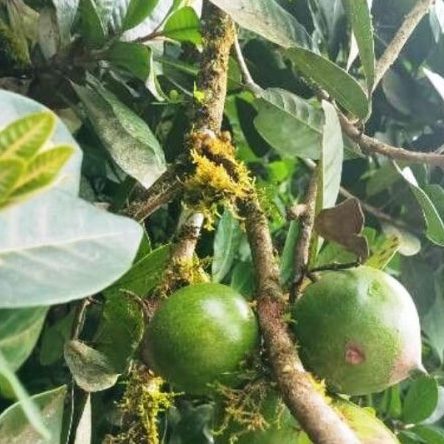
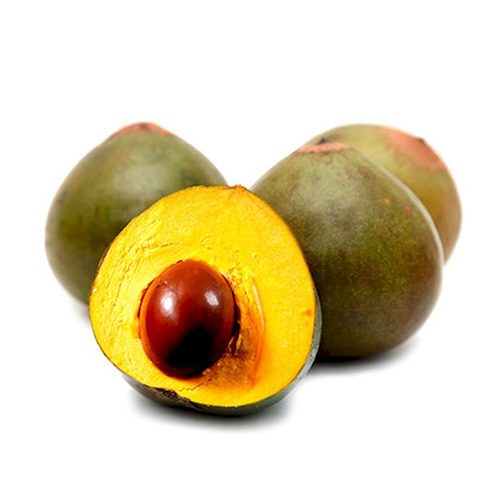
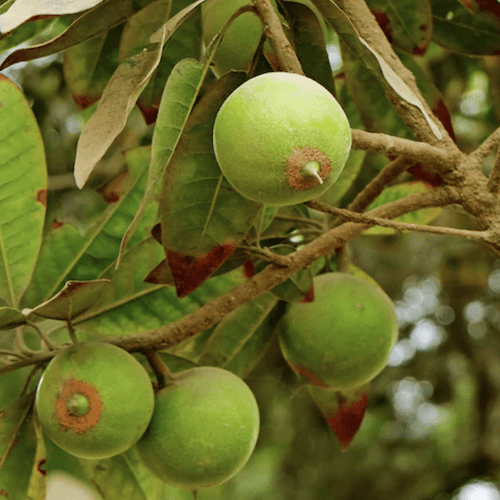
Lucuma (Pouteria lucuma) is an Andean highland fruit from Peru, Chile, and Ecuador — dry-forest and valley orchards, not Amazonian jungle. The pulp is eaten fresh or as powder; the flavor is often compared to maple. That kitchen note is the honest fame of the fruit.
Folk talk mentions tiredness and skin comfort. This is not a medicinal herb and not a blood-sugar treatment. It is a sweet highland fruit you eat, not an Amazonian medicine and not a metabolic drug.
The usual way of use:
Eat the pulp, or mix unsweetened powder into food or a drink. It is a fruit, not a tea protocol and not a capsule therapy. Skip sugary ice creams and “superfood” blends if you want the fruit, not the dessert.
Composition
Lucuma pulp is starch-sweet fruit, not a concentrated drug. Chemists have described carotenoids, phenolics, and ordinary fruit sugars. The hard seed (nut) is not food; a fatty oil from that nut has been studied in the lab, separately from the pulp people eat.
- Pulp sugars and starch: the sweetness is fruit carbohydrate, which is why cooks use the powder as a flavor, not as a medicine.
- Carotenoids and phenolics: Masullo and colleagues mapped pulp and skin metabolites and measured antioxidant activity in chemical assays — food chemistry, not a clinical result.
- Seed oil: Rojo et al. analysed lucuma nut oil as linoleic, oleic, and palmitic acids. That oil is from the inedible seed, not from the pulp in your bowl.
Traditional Use
Andean markets sell lúcuma as fruit and as ice-cream flavor. That is the tradition that matters: food. Claims that it “heals the immune system” or “regulates diabetes” are shop talk stacked on a kitchen fruit.
- Food: fresh pulp, dried powder, desserts. Peru treats it as a national fruit flavor, not as a clinic herb.
- Folk extras: tiredness, skin comfort, “vitality.” Those are kitchen-medicine sentences. They do not make lúcuma an Amazonian master plant.
Precautions and Possible Interactions with Medicines
Ordinary food amounts are the only use that has a long record. Powder is still sugar-rich fruit. Do not treat it as a drug.
- Diabetes medicines: fruit carbohydrate can move blood sugar. Anyone on glucose-lowering drugs should treat this as food, not as an add-on therapy.
- Allergy: rare, but possible with any Sapotaceae fruit.
- Pregnancy: food amounts are the conservative line; there is no clinical dosing study.
Available Scientific Studies
Two papers worth opening. Both are real; neither turns lúcuma into a drug.
“Wound-healing properties of nut oil from Pouteria lucuma”
Authors: Rojo LE, Villano CM, Joseph G, Schmidt B, Shulaev V, Shuman JL, Lila MA, Raskin I (2010)
Overview: Characterised lucuma nut oil and tested fibroblast migration, inflammation markers, zebrafish fin repair, and mouse wound closure. This is seed oil in laboratory models, not pulp eaten as fruit, and not a human wound trial.
Link: https://pmc.ncbi.nlm.nih.gov/articles/PMC4097019/“Pouteria lucuma Pulp and Skin: In Depth Chemical Profile and Evaluation of Antioxidant Activity”
Authors: Masullo M, Cerulli A, Pizza C, Piacente S (2021)
Overview: LC–MS profile of pulp and skin phenolics and polar lipids, plus TEAC antioxidant assays. Confirms a phenolic fruit chemistry. It does not test disease treatment in people.
Link: https://pmc.ncbi.nlm.nih.gov/articles/PMC8434328/