

HERCAMPURI


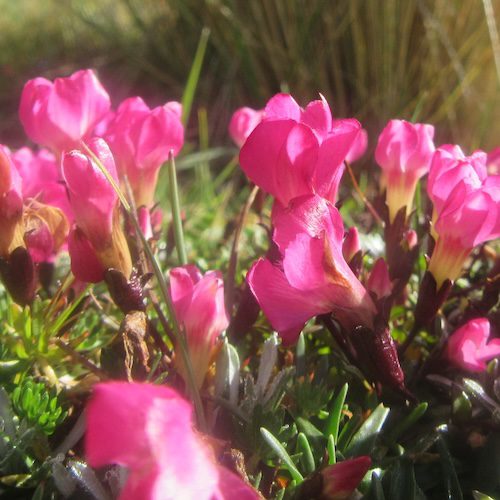
Botanical name:
Gentianella nitida, Gentianella alborosea
Alternative names:
Té amargo, Bitter tea
Main indications:
liver disease, cirrhosis, jaundice
high cholesterol
obesity
THIS PLANT IS PART OF THE LLUVIA SAGRADA HERBAL FORMULA.
Short characteristics:
Hercampuri (Gentianella spp.) is a traditional Amazonian herb highly valued for its medicinal properties, particularly in supporting liver health and aiding digestion. Indigenous communities have used Hercampuri decoctions to stimulate liver function, promote detoxification, and alleviate symptoms of digestive disorders such as stomach pains, indigestion, and bloating. Its bitter compounds, mainly secoiridoids and flavonoids, support the flow of bile, improve metabolism, and help cleanse the gastrointestinal tract. Additionally, Hercampuri is believed to have anti-inflammatory and antioxidant effects, which may help reduce tissue inflammation and oxidative stress. Traditionally, it is consumed as a tea or infusion, often as part of a holistic approach to maintain health, prevent liver-related ailments, and improve overall vitality. Its use reflects a deep understanding of natural healing rooted in Andean medicine.
The usual way of use:
3 grams of dried herb (one large spoons) should be gently cooked in about 0.7 liters of water for 5 minutes. Drink throughout the day.
Powdered herbal extract, whether in capsules or in powder form, should be taken twice a day. The dose depends on the potency—please follow the instructions on the label or consult your health practitioner for guidance.
WARNING: Don’t use longer than for 2 months.
Composition
Hercampuri’s medicinal effects are attributed to a complex array of phytochemicals, including:
- Secoiridoids: Compounds such as gentiopicroside and swertiamarin, which support bile flow and liver detoxification.
- Flavonoids: Quercetin and kaempferol derivatives, which have antioxidant and anti-inflammatory properties.
- Phenolic acids: Including chlorogenic and caffeic acids, supporting cellular protection and detoxification.
- Iridoids: Contribute to anti-inflammatory and digestive effects.
These phytochemicals work synergistically to stimulate hepatic function, aid digestion, and reduce oxidative stress.
Traditional Use
For centuries, Hercampuri has been used extensively by Peruvian tribes and healers for its medicinal benefits:
- Supporting Liver Health: Decoctions of Hercampuri are used to strengthen and detoxify the liver, especially in cases of hepatic congestion, hepatitis, or fatty liver disease.
- Digestive Aid: Traditionally, it alleviates stomach pains, indigestion, and bloating, often consumed as a tea after meals.
- Prevention of Liver Diseases: Indigenous communities use Hercampuri to help prevent liver-related illnesses, especially during periods of heavy alcohol consumption or toxin exposure.
- Anti-Inflammatory and Antioxidant: Its phytochemicals are believed to reduce inflammation and oxidative damage, supporting overall vitality and health.
- Blood Purification: The plant is also used in detoxification rituals to cleanse the blood of impurities.
Hercampuri’s traditional use embodies a holistic approach—supporting internal organ health, preventing disease, and maintaining overall balance.
Precautions and Possible Interactions
Despite its long-standing use, scientific data on Hercampuri’s safety profile is still limited. However:
- Potential side effects: Overuse or high doses may cause gastrointestinal discomfort due to its bitter compounds.
- Drug interactions: Because Hercampuri influences liver function, it may interfere with medications metabolized in the liver, such as certain prescription drugs or supplements. It might enhance or inhibit drug activity.
- Pregnancy and lactation: Safety during pregnancy and breastfeeding has not been established; caution is advised.
- Pre-existing liver conditions: While traditionally used to support the liver, those with severe liver disease should consult healthcare providers before use.
Always consult a healthcare professional or an herbalist before starting Hercampuri, especially if you are on medication or have underlying health issues.
Available Scientific Studies
Although research on Hercampuri is still emerging, some studies support its traditional claims:
**“A novel sesterterpenoid, nitiol, as a potent enhancer of IL‑2 gene expression in a human T cell line, from the Peruvian folk medicine ‘Hercampuri’ (Gentianella nitida)”**
Authors: N. Kawahara, M. Nozawa, A. Kurata, T. Hakamatsuka, S. Sekita, M. Satake
Overview: Identification of the compound nitiol, a sesterterpenoid from G. nitida, which enhances IL‑2 gene expression in human T‑cells—suggesting immunomodulatory potential.
Link: https://pubmed.ncbi.nlm.nih.gov/10517015/ MDPI+15PubMed+15Wikipedia+15**“A new secoiridoid glucoside, amaronitidin, from the Peruvian folk medicine ‘Hercampuri’ (Gentianella nitida)”**
Authors: N. Kawahara, K. Masuda, S. Sekita, M. Satake
Overview: Discovery and structural elucidation of amaronitidin, a novel secoiridoid glucoside from G. nitida, along with related compounds amarogentin, amaroswerin, and decentapicrin A.
Link:https://www.researchgate.net/publication/11927599_A_New_Secoiridoid_Glucoside_Amaronitidin_from_the_Peruvian_Folk_Medicine_Hercampuri_Gentianella_nitidaResearchGate+6ResearchGate+6Wikipedia+6**“Apoptotic and free radical scavenging properties of the methanolic extract of Gentianella alborosea”**
Authors: N. Acero et al. (2006)
Overview: Evaluation of the methanolic extract of G. alborosea showing significant antioxidant (free radical scavenging) activity and inducing apoptosis in HeLa cancer cells, pointing to potential anticancer and antioxidant benefits.
Link: https://www.sciencedirect.com/science/article/abs/pii/S0367326X06001419energygreen.pe+15ScienceDirect+15ResearchGate+15**“The ethnobotany and ethnopharmacology of Gentianella alborosea (Gilg) Fabris and Gentianella nitida (Griseb.) Fabris (family Gentianaceae) used in Peru: A review”**
Authors: S. Rubio‑Guevara, K. Olascuaga‑Castillo, C. Blanco‑Olano, J. Valdiviezo‑Campos (2020)
Overview: Ethnopharmacological review detailing traditional uses of both species for liver diseases, hypercholesterolemia, diabetes, and noting hypoglycemic, lipid-lowering, antioxidant, hepatoprotective, antimicrobial effects—particularly highlighting that G. nitida shows stronger support from studies, while G. alborosealacks conclusive evidence.
Link: https://ethnobotanyjournal.org/index.php/era/article/view/1813ResearchGate+4ethnobotanyjournal.org+4Wikipedia+4