

FLOR DE ARENA
Botanical name:
Tiquilia paronychioides (Phil.) A.T. Richardson
Alternative names:
Flor de arena, paja de lagartija, mano de ratón, hierba blanca
Main indications:
urinary and kidney folk tea
prostate and “inflammation” talk in northern Peru
THIS PLANT IS PART OF THE LLUVIA SAGRADA HERBAL FORMULA.
Short characteristics:
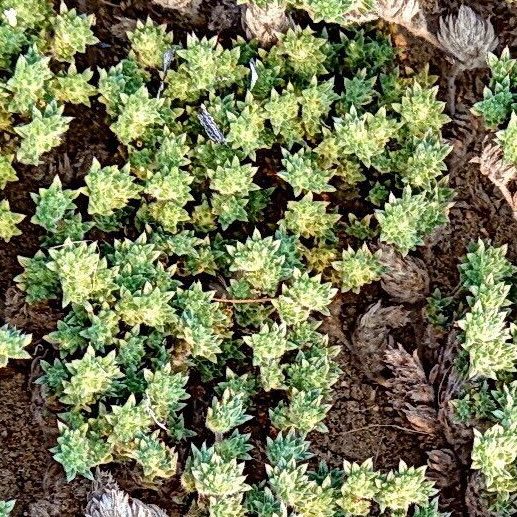
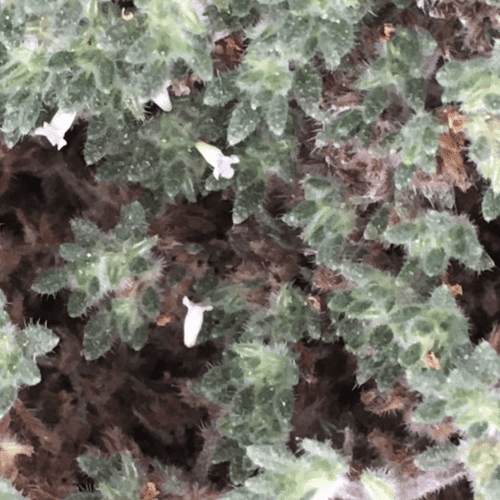
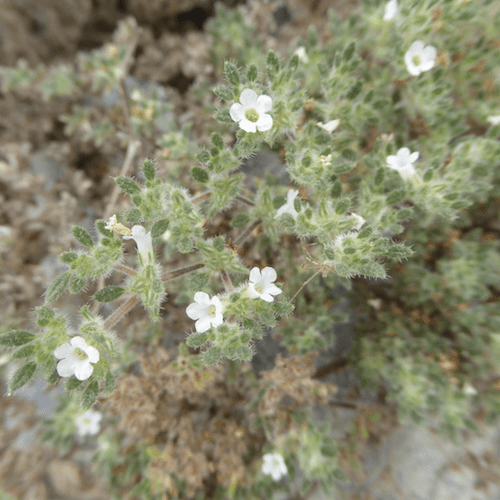
Flor de arena is Tiquilia paronychioides, a small Boraginaceae of the Peruvian coastal desert and dry west. Sand flower, lizard straw. It is not an Amazonian rainforest herb, however often shops file it that way.
Northern Peruvian folk medicine uses aerial parts as a tea for urine, kidney, and prostate talk. Published chemistry and toxicology are thin. That gap is the story: a used desert plant, not a proven urology drug.
The usual way of use:
Short infusion of the dried aerial herb, if you use it at all. Folk practice is a tea, not a months-long extract and not a prostate protocol. Do not “cook it down” into a bitter shot. There is no clinical dose.
Composition
What is in the plant is still poorly published. Reviews list the usual first-pass phytochemical classes — flavonoids, tannins, terpenoids — from limited assays. That is not a full metabolome, and it is not a standardized drug profile. Anyone selling a precise “active” for flor de arena is ahead of the papers.
- Sparse chemistry: no well-replicated, high-quality constituent list comparable to cacao or artichoke.
- Boraginaceae caution: the family includes plants with pyrrolizidine alkaloids. That is a family-level warning, not a demonstrated finding for this species. It is a reason not to drink it daily for months without data.
Traditional Use
Bussmann and Sharon’s northern Peru surveys record a wide healing flora in which desert plants sit beside coastal and highland ones. Later ethnobotanical compilation for this species lists urinary, kidney, prostate, ovarian, and “depurative” uses, plus a few more ambitious claims (including cancer in second-hand reports). Those lists document what people say. They do not prove effect.
- Urinary and kidney tea: the use you will actually hear.
- Prostate and pelvic “inflammation”: common shop sentence in the north.
- Not Amazonian: coastal desert and dry west, not várzea.
Precautions and Possible Interactions with Medicines
Human safety data are essentially missing. Treat that as a stop sign for long courses, pregnancy, and anyone with kidney disease who is already on real drugs.
- No clinical toxicology: the 2020 review flags this gap instead of filling it.
- Kidney disease, diuretics, lithium: do not add a “diuretic” folk tea on top of a prescription.
- Pregnancy and breastfeeding: no.
- Prostate cancer or infection: tea is not a work-up and not an antibiotic.
Available Scientific Studies
Two sources that exist. One is a broad field survey; one is a species review that admits how little pharmacology is known.
“Traditional medicinal plant use in Northern Peru: tracking two thousand years of healing culture”
Authors: Bussmann RW, Sharon D (2006)
Overview: Ethnobotanical survey of northern Peruvian healing plants, placing coastal and desert species in a long regional practice. Context for flor de arena’s neighborhood, not a clinical trial of the plant.
Link: https://pmc.ncbi.nlm.nih.gov/articles/PMC1637095/“Tiquilia paronychioides (Phil.) A. T. Richardson (Boraginaceae): An ethnobotanical, ethnopharmacological, and toxicological review”
Authors: Saldaña-Bobadilla V, Ramirez J-K, Perez-Chauca E, Minchan-Herrera P (2020)
Overview: Species review: oral infusions of aerial parts for urinary, kidney, prostate, and “depurative” uses; little solid pharmacology or toxicology. The paper’s conclusion is the gap, not a hidden efficacy claim. Ethnobotany Research and Applications 19:1–13 (2020).
Link: https://ethnobotanyjournal.org/index.php/era/article/view/1829