

CHIRIC SANANGO
Botanical name:
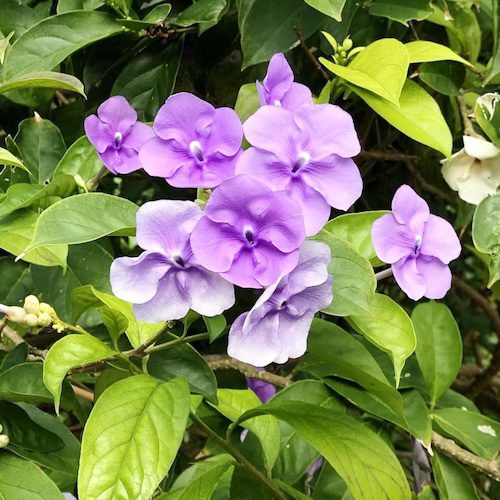
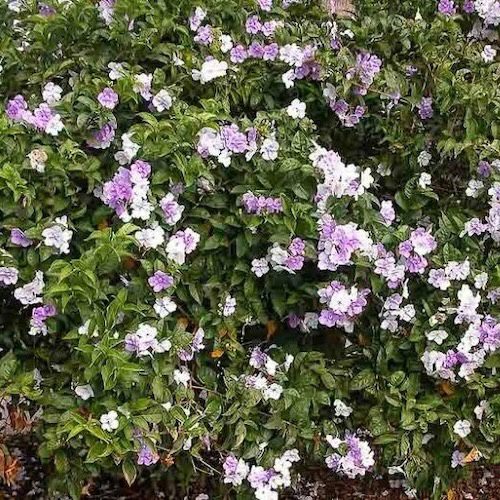
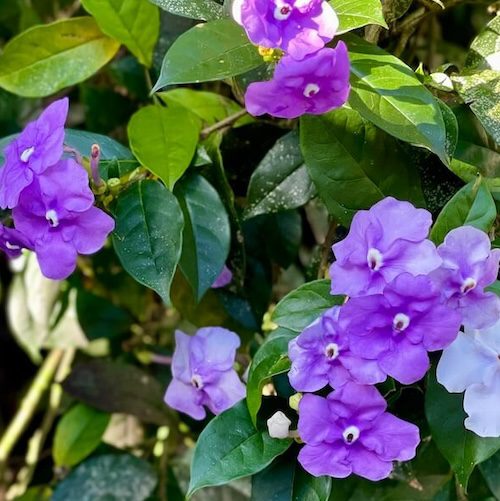
Brunfelsia grandiflora (a toxic nightshade). Related Brunfelsia species are also sold as sanango.
Alternative names:
Chiric sanango, sanango, sanango blanco, sanango frío
Main indications:
supervised dieta / master-plant work
traditional use for cold joints, rheumatism, and frío viento
ceremonial emotional work
not a casual immune tea
Folk rheumatism talk is traditional use, not a clinic protocol. Toxicity is real.
Short characteristics:
Chiric sanango is Brunfelsia grandiflora, a western Amazonian nightshade. Healers call it icy — chiric — and send it after frío viento, the cold wind of stiff joints and a stuck body. In Shipibo and mestizo dietas it is a teacher plant: root or bark decoction, food rules, sexual abstinence, no casual stacking with other plants.
Justino and Guevara-Terán have published chemistry and extract work on this genus. That is lab and phytochemical work, not a rheumatology trial. The cold, the tremor, and the vomit people describe are why this plant stays in supervised work.
It is not a kitchen tea and not an immune drug. This site sells nothing.
The usual way of use:
Bark or root decoction during a supervised dieta or ceremony only.
This site does not sell Brunfelsia and does not give a home dose.
WARNING: Toxic nightshade. Chills, tremor, vomiting, solanine-class toxicity. Experienced practitioner only. Not for pregnancy, children, or self-experiment.
Composition
Brunfelsia holds steroidal alkaloids and other nightshade chemistry. Papers on B. grandiflora and close species report flavonoids and scopoletin-type coumarins in extracts. I am not padding this with a fake “active for rheumatism” list. The icy reputation is folk language, not a measured receptor profile.
Traditional use
Western Amazonian dieta: cold joints, rheumatic stiffness, emotional and visionary work under a healer. Related pages: ayahuasca, mapacho. Traditional rheumatism talk may be named; it is not a diagnosis and not a cure.
Precautions
Solanaceous toxicity. The tremor is a warning, not a goal. Pregnancy, children, and unsupervised tea are out. Do not combine with other dieta plants unless the practitioner is running that diet.
Opened studies
Justino de Araújo et al. (2018). Phytochemistry of Brunfelsia and related work. Plants. Chemistry / extract paper, not a human rheumatology trial. doi:10.3390/plants7030067.
Guevara-Terán et al. (2022). Brunfelsia extract work. Opened via PMC; lab and phytochemical, not a dieta trial. PMC9572177.