

CAMU CAMU
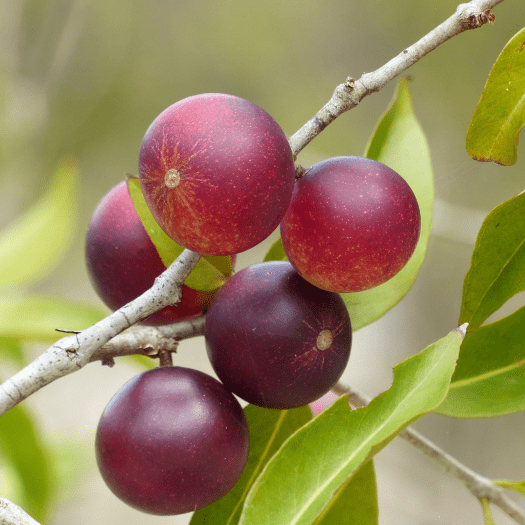
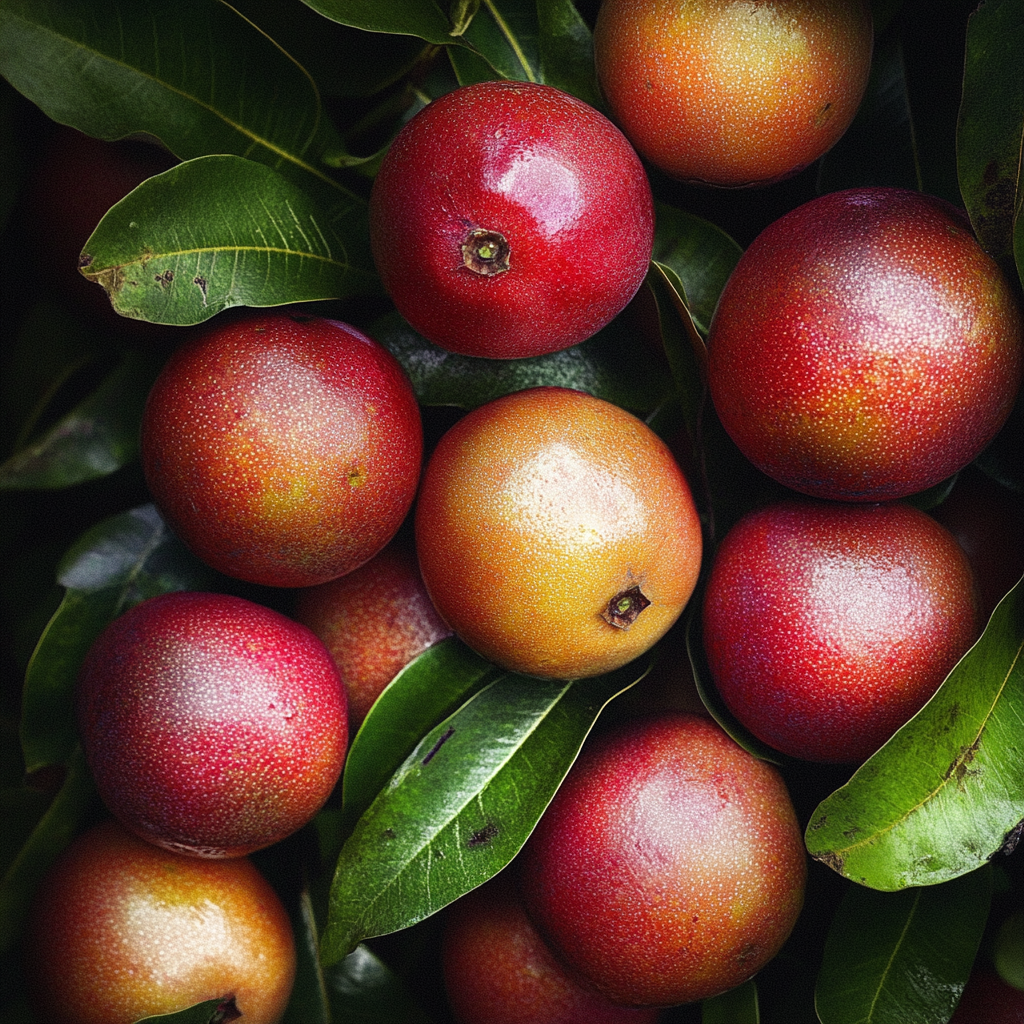
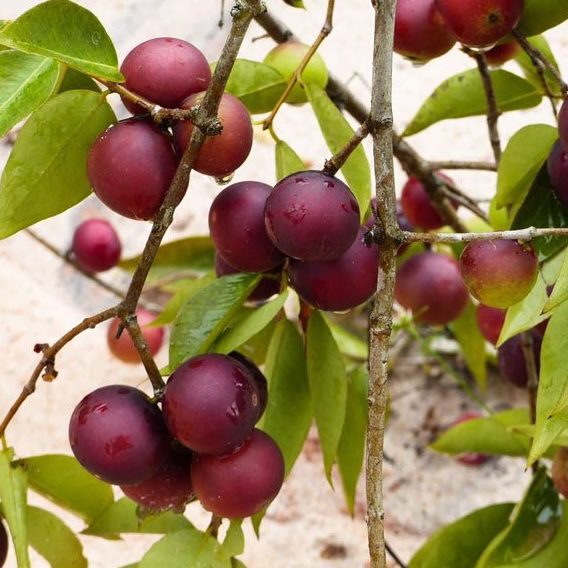
Botanical name:
Myrciaria dubia (Kunth) McVaugh
Alternative names:
Camu camu, camocamo, caçari, araçá-d’água
Main indications:
Amazon floodplain food fruit
very high vitamin C
sour pulp
THIS PLANT IS PART OF THE MEZCLA JAGUAR HERBAL FORMULA.
Short characteristics:
The pulp is so sour most people never eat it off the bush. The fact that survives marketing is vitamin C — grams per 100 g in fresh pulp, far above orange. I do not want the sugary “camu” drinks. I also will not repeat anti-aging or Parkinson copy. One small smoker study (70 ml juice vs vitamin C tablets, 7 days, n=20) moved some oxidative and inflammatory markers. That is not a neurology trial.
Inoue 2008 is that smoker study. Langley 2015 is an industry-funded review — use it for the Inoue summary and the vitamin C file, not for disease claims. This site sells nothing.
The usual way of use:
Unsweetened pulp or unsweetened powder in water. Skip juice with sugar.
This site sells nothing.
WARNING: High ascorbic acid can loosen the gut and is a stone risk in people who form oxalate stones. Mega-dosing is not a good idea (Langley notes a published hepatitis case blamed on a camu product).
Composition
Ascorbic acid first; also phenolics, some anthocyanins (cyanidin-3-glucoside reported).
Traditional use
Floodplain fruit, later tonic talk. Not an anti-aging or Parkinson product.
Precautions
GI upset, oxalate stones, one published hepatitis case blamed on a camu product (Langley cites Bertoli — a reason not to mega-dose, not a scare banner).
Opened studies
Inoue et al. (2008). Camu camu juice versus vitamin C tablets in smokers, 7 days. n=20; oxidative/inflammatory markers. Not neurology. PMID 18922386.
Langley et al. (2015). Camu camu review. Industry-funded; use for vitamin C file and Inoue summary, not disease claims. PMID 25275221 · PMC4296744.