

ANNONA MURICATA
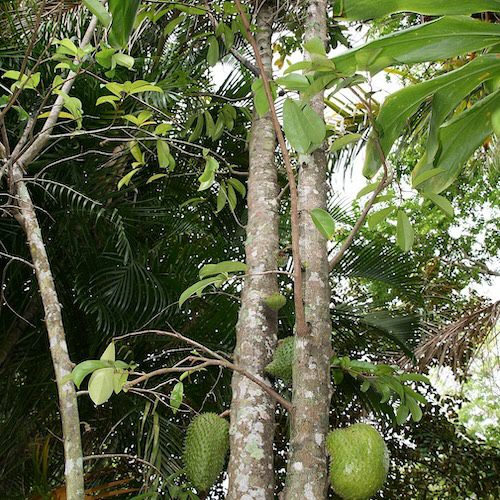

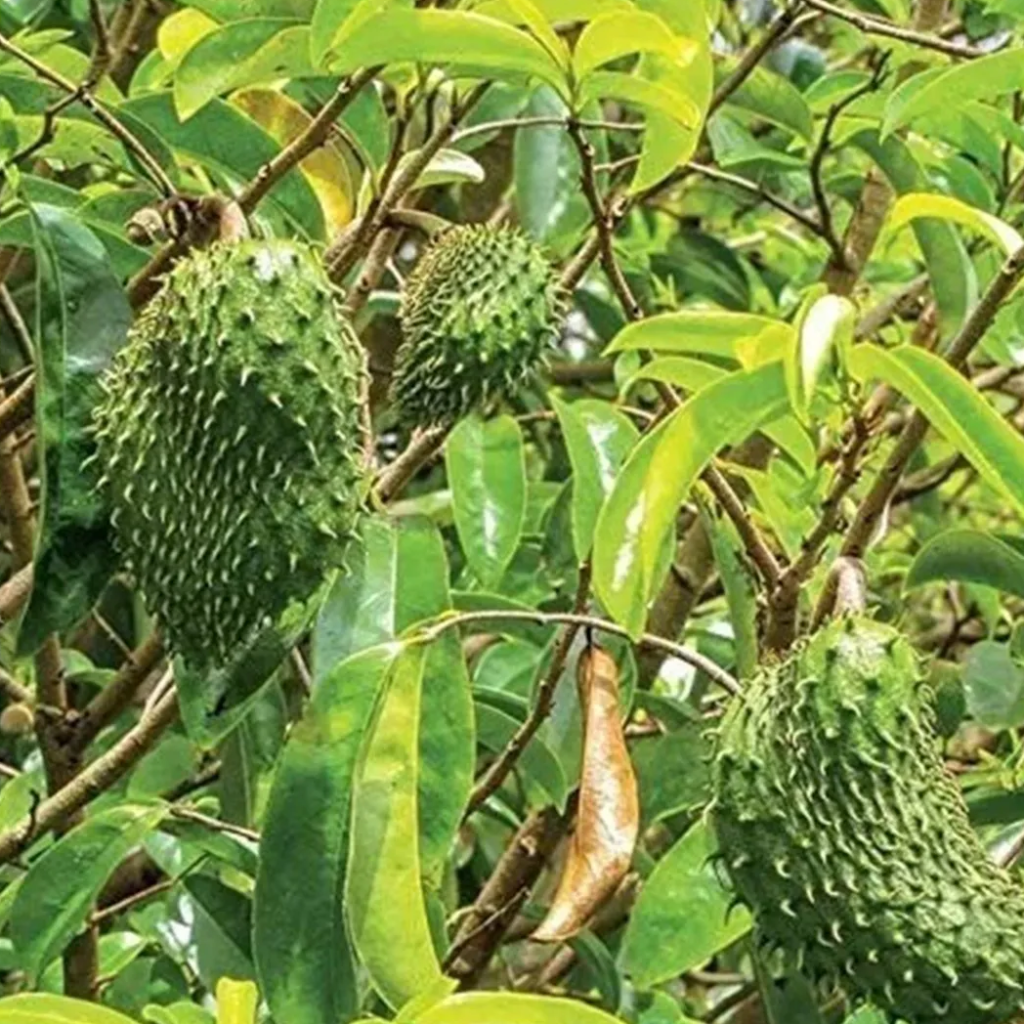
Botanical name:
Annona muricata
Alternative names:
Graviola, Guanábana, Soursop, Guayabano
Main indications:
neoplasms and cancer
depression
parasites
high blood pressure
heart support
poor digestion
Short characteristics:
In traditional Amazonian medicine, Annona muricata, commonly known as soursop or graviola, has been valued for its wide-ranging healing properties for centuries. Indigenous communities use the leaves, bark, and seeds to treat ailments such as inflammation, fever, parasitic infections, and digestive issues. The plant’s powerful bioactive compounds, including acetogenins, are believed to support immune function, help detoxify the body, and promote tissue regeneration. Additionally, many cultures consider Annona muricata a natural remedy for certain types of tumors or growths, attributing to it anticancer and antiproliferative properties. Its use is often incorporated into rituals and natural healing practices aimed at restoring harmony within the body, mind, and spirit—highlighting its revered status as a sacred medicine of the rainforest.
The usual way of use:
3 to 5 grams of dried herb (one to two large spoons) should be gently cooked in about 0.7 liters of water for 7 minutes. Drink throughout the day.
Powdered herbal extract, whether in capsules or in powder form, should be taken twice a day. The dose depends on the potency—please follow the instructions on the label or consult your health practitioner for guidance.
WARNING:
Long-term use of Annona muricata (Graviola) may lead to the depletion of beneficial bacteria in the digestive tract. It is recommended to supplement your diet with probiotics and digestive enzymes if you plan to consume graviola for longer than 30 days.
Annona muricata has been shown to lower blood pressure. If you are taking medication for hypertension, you should monitor your blood pressure more frequently and consider either reducing the medication dosage or drinking milder herbal infusions.
In higher doses, Annona muricata can also slow the heart rate (pulse). If you are on medication to lower your heart rate—such as beta-blockers—you should regularly check your pulse and blood pressure, similar to monitoring when adjusting blood pressure medication.
Composition
The medicinal effects of Annona muricata stem from a complex mixture of bioactive phytochemicals:
Acetogenins (such as annonacin, annonusin, and annonol): These are unique fatty acids with potent cytotoxic and antiproliferative effects. Acetogenins are considered the key compounds responsible for many of A. muricata’s anti-cancer properties. They work by inhibiting mitochondrial respiration in cancer cells, leading to cell death.
Alkaloids: The plant contains diverse alkaloids, such as reticuline and asimilobine, which have shown neuroprotective and anti-inflammatory effects in studies.
Flavonoids: Compounds like quercetin and kaempferol derivatives that provide antioxidant, anti-inflammatory, and neuroprotective activities. Flavonoids help neutralize free radicals, reducing oxidative stress associated with chronic diseases.
Phenolic acids: Such as chlorogenic acid, which supports detoxification, anti-inflammatory responses, and cellular health.
Vitamins and minerals: Especially high in vitamin C, supporting immune function, and containing essential minerals like magnesium, calcium, and iron.
The overall phytochemical profile makes A. muricata a rich natural source of antioxidants, cellular protectors, and inflammation modulators.
Traditional Use
For generations, A. muricata has been woven into the cultural fabric of indigenous and local communities across South America, especially in Peru. Its traditional applications encompass a broad scope:
Cancer and Tumor Support: Many elders and shamans use extracts from leaves, bark, and seeds, believing they inhibit tumor growth and promote tissue regeneration. Some communities use the leaves in poultices or infusions during illness.
Anti-inflammatory and Pain Relief: Decoctions or poultices are used for arthritis, joint pain, and other inflammatory conditions, leveraging the plant’s compounds that help reduce swelling and inflammation.
Fever and Infectious Diseases: Herbal teas made from leaves are traditionally used to lower fever, treat infections, and boost the immune system.
Digestive Health: The fruit is believed to calm stomach aches, reduce bloating, and eliminate parasites, while the seeds support the cleansing of intestinal toxins.
Spiritual and Ritual Significance: In some communities, A. muricata is part of ceremonial practices aimed at spiritual purification and inner healing, supporting holistic health at physical, mental, and spiritual levels.
Precautions and Possible Interactions
While A. muricata boasts a long history of safe traditional use, scientific studies have raised some concerns:
Neurotoxicity Risks: Some acetogenins, especially annonacin, are potent toxins. Animal studies have linked high intake of annonacin to neurodegenerative diseases like Parkinson’s. It’s theorized that excessive consumption may harm the nervous system over time.
Cancer Treatment Considerations: Although A. muricata shows promising antiproliferative effects in laboratory settings, it is not a proven cure for cancer. Its use as an adjunct therapy should only be under medical supervision. In particular, people undergoing chemotherapy should consult their oncologist, as the plant’s bioactive compounds could interfere with treatments.
Pregnancy and Breastfeeding: The safety of A. muricata during pregnancy and lactation is uncertain. Its powerful bioactive compounds could potentially affect fetal development or milk production.
Drug Interactions: The plant’s compounds may interact with medications, especially those affecting the nervous system or mitochondrial activity.
Available Scientific Studies
Recent research underscores some of the traditional claims, although much remains to be validated in humans:
1. Comprehensive Medicinal Review
Title: Annona muricata: A comprehensive review on its traditional medicinal uses, phytochemicals, pharmacological activities, mechanisms of action and toxicity
Link: https://www.sciencedirect.com/science/article/pii/S1878535216000058
Summary: Reviews traditional and modern uses of A. muricata, describing activities like antimicrobial, antioxidant, anti-inflammatory, anticonvulsant, hypoglycemic, and cytotoxic effects, while also highlighting its potential toxicity. ScienceDirect
2. Mechanistic Review – Anticancer Properties
Title: Anticancer properties of Graviola (Annona muricata): A comprehensive mechanistic review
Link: https://onlinelibrary.wiley.com/doi/full/10.1155/2018/1826170
Summary: Discusses the molecular actions of acetogenins from A. muricata leaves and their potential to inhibit cancer cell proliferation and induce apoptosis. Wiley Online Library
3. In Vitro Anti-Cancer Effects on Skin Cancer Cells
Title: Graviola (Annona muricata) exerts anti-proliferative, anti-clonogenic, and pro‑apoptotic effects in human non-melanoma skin cancer UW‑BCC1 and A431 cells in vitro
Link: https://www.ncbi.nlm.nih.gov/pmc/articles/PMC6032424/
Summary: Demonstrates A. muricata leaf and stem extracts suppress skin cancer cell growth and migration while promoting apoptosis via Hedgehog signaling pathways. PMC
4. Anticancer Effects on Breast Cancer Cells
Title: Anti‑cancer effect of Annona muricata Linn leaves crude extract (AMCE) on breast cancer cell line
Link: https://bmccomplementmedtherapies.biomedcentral.com/articles/10.1186/s12906-016-1290-y
Summary: Reports dose-dependent cytotoxicity and apoptosis in breast cancer cell lines (MCF-7, MDA-MB-231, 4T1) following treatment with A. muricata leaf extract. BioMed Central
5. Cytotoxic Compounds and Bioactivity Characterization
Title: Comprehensive chemical profiling and mechanistic insight into anticancer activity of Annona muricata leaves extract
Link: https://www.mdpi.com/1424-8247/17/5/614
Summary: Analyzes phytochemicals in A. muricata leaves and elucidates mechanisms underlying anticancer effects. MDPI
6. Antioxidant Activity of Leaf Extracts
Title: Comparative analysis of infusions and ethanolic extracts of Annona muricata leaves from Colima, Mexico: Phytochemical profile and antioxidant activity
Link: https://www.mdpi.com/2075-1729/14/12/1702
Summary: Compares extraction methods, demonstrating that both infusions and ethanolic extracts contain significant antioxidant compounds, with geographic variation in efficacy. MDPI
7. Antidiabetic Focused Review
Title: Annona muricata: Comprehensive review on the ethnomedicinal, phytochemistry, and pharmacological aspects focusing on antidiabetic properties
Link: https://www.mdpi.com/2075-1729/13/2/353
Summary: Explores the plant’s traditional roles and scientific evidence supporting its use in managing diabetes and improving glucose metabolism. MDPI
8. Ethnomedicinal, Antimicrobial & Anticancer Review
Title: Anti-infective and anti-cancer properties of the Annona species: Their ethnomedicinal uses, alkaloid diversity, and pharmacological activities
Link: https://www.mdpi.com/1420-3049/24/23/4419
Summary: Highlights the broad medicinal use of A. muricata, including anti-microbial and anti-cancer activities, via its rich phytochemical profile. MDPI