

ANNONA MURICATA

Botanical name:
Annona muricata
Alternative names:
Graviola, guanábana, soursop, guayabano
Main traditional uses:
fruit as food
leaf tea for fever and a heavy stomach, in folk use
folk parasite use of leaf or seed — seeds are toxic if misused
traditional cancer talk — folk, not oncology
Fruit is food. Leaf tea is a different, stronger use. Acetogenins are the reason for both the cancer marketing and the parkinsonism caution.
Short characteristics:
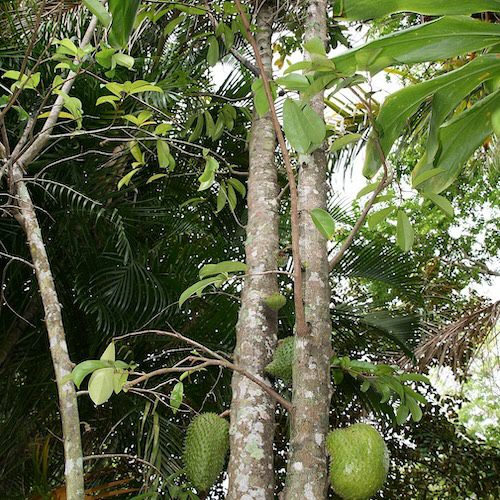
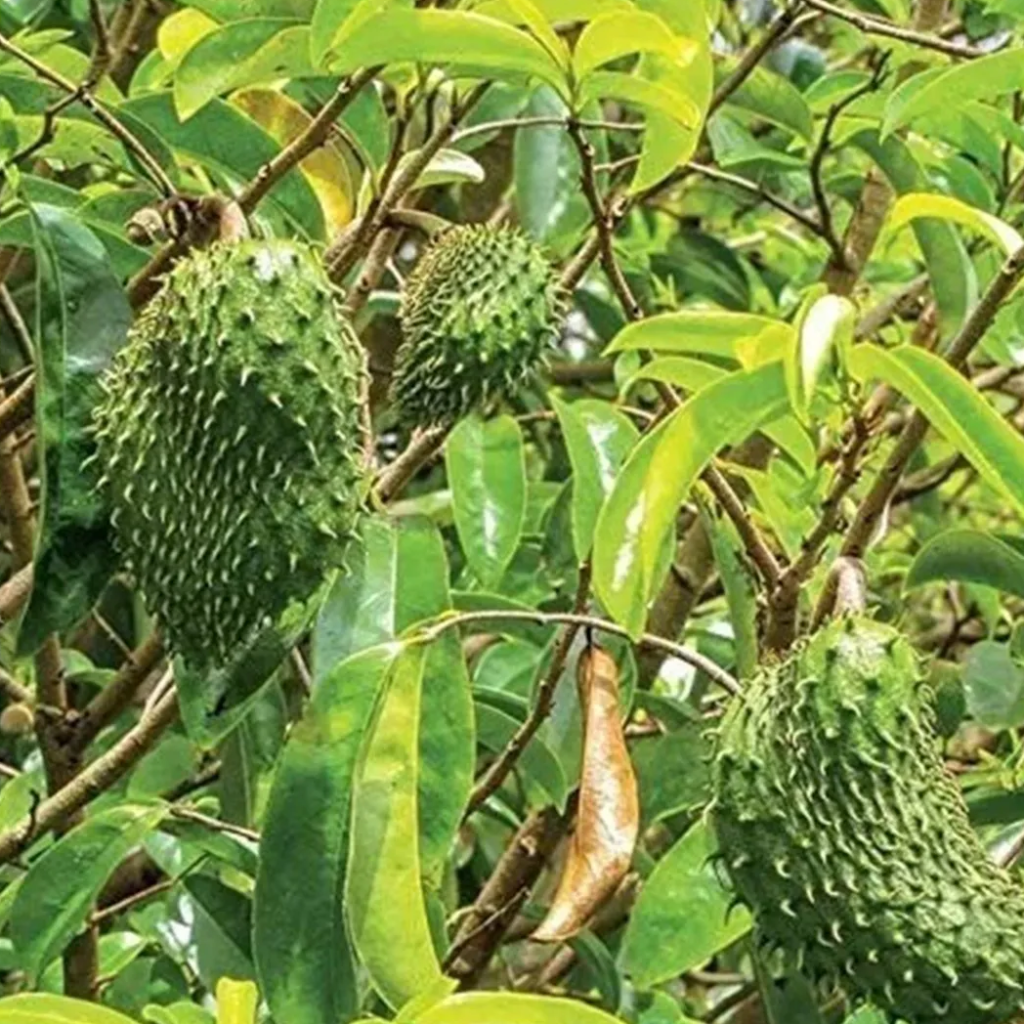
Annona muricata is soursop: a lowland tropical fruit tree, common in the Amazon and far beyond it. People eat the fruit. Healers also simmer the leaves — and sometimes bark or seed — for fever, parasites, and a heavy stomach. Traditional talk has named cancer. That talk is old and loud. It is still folk talk.
The leaves are rich in acetogenins (annonacin and kin). Those compounds kill cells in a dish (Chamcheu 2018 is lab cytotoxicity). The same chemistry is why heavy or long leaf use has been tied to atypical parkinsonism in the French Caribbean (Champy 2005; Lannuzel 2007). Fruit pulp carries far less of this than concentrated leaf products.
Treat the fruit as food. Treat leaf tea as a short, cautious folk medicine. Do not treat either as an oncology protocol. See Amazonian herbs and cancer. This site sells nothing.
The usual way of use:
Fruit is eaten. Folk leaf tea: 3 to 5 grams of dried leaf in about 0.7 liters, cooked about 7 minutes, drunk through the day — short courses only.
This site sells nothing. Seeds are not food.
WARNING: Acetogenins (especially annonacin) are cytotoxic. Long or high-dose leaf use has been associated with atypical parkinsonism. Not a cancer treatment. Not for pregnancy. Can lower blood pressure. Seeds are toxic if misused.
Composition
Fruit: ordinary tropical-fruit sugars, some phenolics, a little acetogenin compared with leaf. Leaf and seed: annonaceous acetogenins, including annonacin. That is the molecule behind both the “kills cancer cells in a dish” posters and the nigral-toxicity story. Do not advertise one without the other.
Traditional use
Food fruit across the lowland tropics. Folk leaf teas for fever, gut, parasites, and — in the last decades — cancer marketing. Traditional cancer talk may be named. It is not a protocol. Seeds as a folk parasite material are a toxicity problem, not a tip.
Precautions
Atypical parkinsonism association is the hard caution (Guadeloupe literature). Pregnancy out. Blood-pressure drop. Do not run leaf tea for months as a “protocol.” This site sells nothing.
Opened studies
Champy et al. (2005). Annonacin, a lipophilic inhibitor of mitochondrial complex I, induces nigral and striatal neurodegeneration in rats. Acetogenin / parkinsonism lab story. doi:10.1002/mds.20632.
Lannuzel et al. (2007). Atypical parkinsonism in Guadeloupe: a common tauopathy associated with consumption of Annonaceae. Brain. Human neurologic association, not a fruit-as-food paper. doi:10.1093/brain/awl347.
Chamcheu et al. (2018). Graviola / acetogenin cytotoxicity in cell models. Lab cytotoxicity only — not a cancer trial. PMC6032424.