Why the plants do not work if you live like you did last month
If a curandero you trust has booked you for ayahuasca, mapacho or San Pedro, and then handed you a list of things you may not eat, drink, or do — that list is the work. The ceremony is one night. The dieta is the container.
I say the same when someone starts a serious herbal protocol. The plants are not a pill you drop into an unchanged life. In the Upper Amazon the dieta is treated as equal to the medicine. Sometimes as more important.
Dieta is not “diet.” It is the set of conditions under which a plant is allowed to teach — food, sex, company, and what you refuse.
What fieldworkers actually recorded
Luis Eduardo Luna, working with mestizo vegetalistas around Iquitos in the early 1980s, wrote it down without romance: if you isolate, keep a prescribed diet, and abstain from sex, certain plants — doctores, plant teachers — can show the healer how to diagnose, how to sing, how to work. The “ideal” plate he was given was cooked plantain, smoked fish, sometimes game. Salt, sugar, fat, spice, alcohol, and sex were out. The dieta could last days after a brew, or months, or years for an apprentice.
That paper is Luna 1984, Journal of Ethnopharmacology. Jauregui and colleagues later named fifty-five plantas con madre used in East-Central Peru under the same kind of dieta, sequenced as cleansing, sensitivity, strengthening, then protection (Jauregui et al. 2011). In Chazuta, Sanz-Biset and Cañigueral recorded 122 “strict diets” — plant, near-fast, seclusion, two weeks to two months (2011). A 2021 review in Frontiers in Pharmacology is the clean overview: Amazonian medicine and the dieta.
Tourist retreats flattened this into “no pork, no chili, no sex for three days so the ayahuasca is nicer.” That is a fragment. A full dieta is a relationship with one plant, kept under rules, often in a small house in the forest, with a maestro watching.
Alcohol, other drugs, and the medicines you already take
Alcohol is out. Not because wine lacks polyphenols. Because a dieta is about receptivity, and because WHO’s 2023 statement is blunt: no safe level of alcohol for health has been shown. Mediterranean longevity is not a license to drink on a plant diet.
Other psychoactives are out. Master plants are themselves psychoactive. They are not a party. Combining ayahuasca — a reversible MAO-A inhibitor plus DMT — with street stimulants, or with many psychiatric drugs, can kill. I am not telling you to stop a prescribed antidepressant on the internet. I am telling you that “I take an SSRI and I booked a ceremony” is a medical emergency waiting to happen. Tell the healer. Tell your physician. If either of them shrugs, walk away.
Unnecessary sleeping pills, leftover antibiotics, daily painkillers taken from habit — those are worth a second opinion. Necessary treatment is not. Do not play doctor with your own heart medicine.
Coffee, garlic, chili, onion: restricted before ceremonies and during many dietas because they are “hot” or stimulating in this system. Guayusa is a milder caffeine leaf and still not for everyone (blood pressure, pregnancy, sleep).
Food
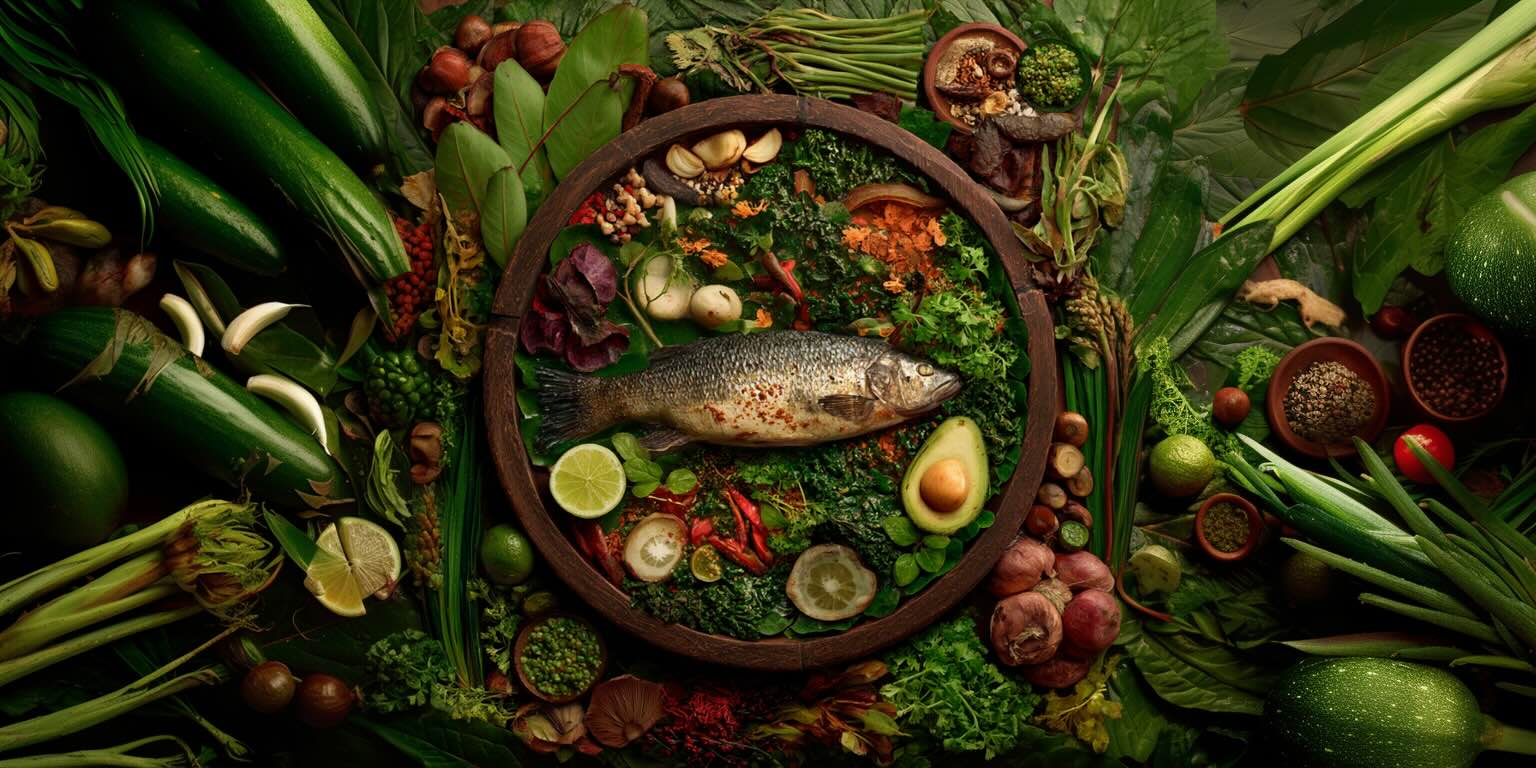
Heavy, greasy, processed food is out. Pork and often beef are out. Sugar, excess salt, and spice are out. What remains is bland on purpose: rice, plantain, fish, light soup, some fruit. Luna’s informants were not designing a nutrition paper. They were making the body quiet enough for the plant.
Fermented food — soy sauce, aged cheese, kimchi, some pickles — gets banned before ayahuasca for a chemical reason as well as a traditional one. The vine’s β-carbolines inhibit MAO-A. Tyramine-rich foods are the classic MAOI problem. The retreat list and the pharmacology happen to agree here. See McKenna, Towers & Abbott 1984.
Stress, company, sex
You rest. You do not pick fights. You stay out of the market and the family argument. That is not superstition about “bad energy.” A dieta is a retreat. Cortisol and a screaming household will not help you hear anything, plant or otherwise.
Sexual abstinence is in almost every account Luna, Jauregui, and the Chazuta work collected. The local language is fuerza, vital force. Ayurveda and Chinese medicine have their own versions; that does not make them the same system. It means several old medicines treat sexual expenditure as a real cost during recovery. I will not pretend modern trials have mapped ejaculation to “jing.” I will say: if you came to diet, diet. Do not negotiate the rule on night three.
If you are not in the forest
You can still stop treating a bark decoction like a vitamin gummy. Eat simpler food while you take the plants. Sleep. Leave the bottle alone. Do not stack three master plants off the internet. Read the ayahuasca piece before you book a ceremony, and Beyond herbs if you think a tea replaces a life.
The dieta is discipline. The plants do the rest — or they don’t. Without the container, you just drank something bitter.