

COLA DE CABALLO
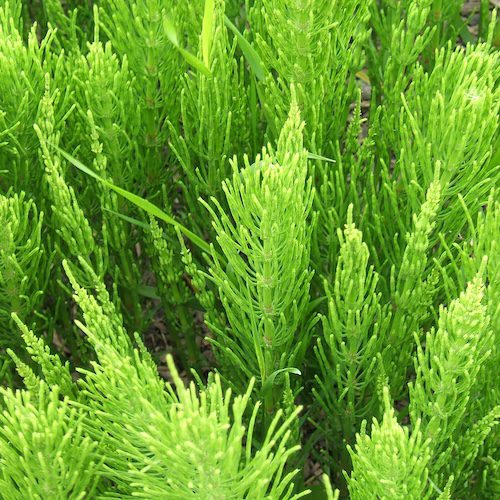
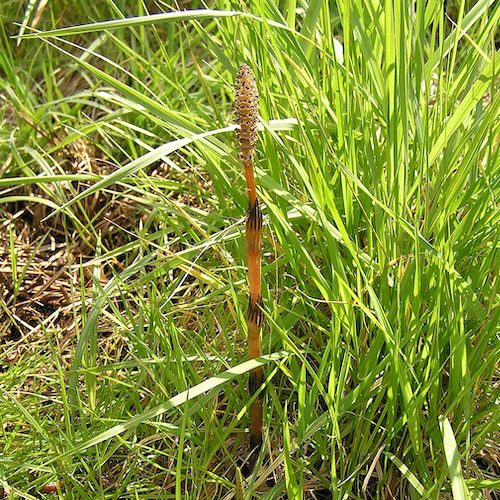
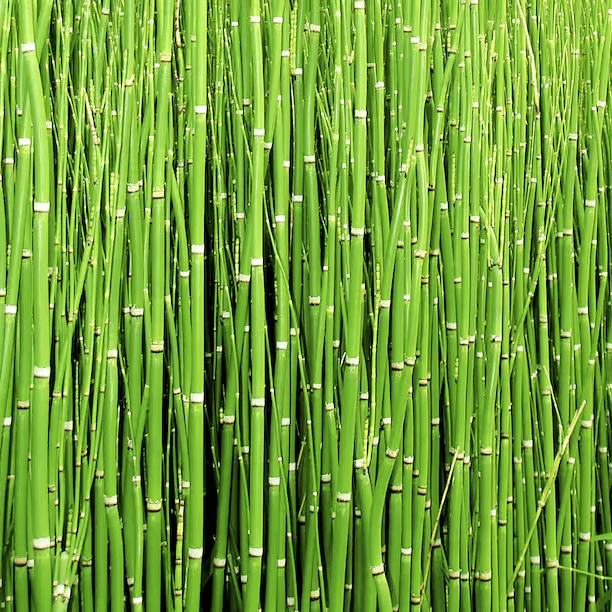
Botanical name:
Equisetum giganteum, Equisetum bogotense
Alternative names:
Cola de caballo, horsetail, equiseto
European field horsetail is Equisetum arvense, a species often mislabeled on this trade.
Main indications:
mineral / silica tea
urinary comfort, in folk use
hair, nails, and skin, in folk use
minor cuts, in folk use
THIS PLANT IS PART OF THE ESPÍRITU DEL LAGO HERBAL FORMULA.
Short characteristics:
Cola de caballo is a horsetail. European field horsetail is Equisetum arvense. Andean and Amazon material sold under this name is usually E. giganteum or E. bogotense. Trade bags mix the names, so the bottle is not always the European species.
People brew the dried stems as a silica-rich mineral tea and a folk diuretic. Crushed stems go on minor cuts. That is everyday folk use. It is not a UTI drug, a stone-clearance protocol, or a fracture medicine. Lemus 1996 is a real human tea trial — on E. bogotense — and it raised urinary sodium, potassium, and chloride. That is why the potassium warning stays.
The usual way of use:
Pour about 700 ml of cold water over 1–2 spoons of the herb; boil 10–20 minutes after the boil. A few drops of lemon are the old silica-absorption habit. Drink a glass twice a day. External wash: the same decoction with less water.
This site sells nothing. The old intravaginal line is dropped.
WARNING: Potassium loss is documented in the Lemus E. bogotense tea trial — 2 cups a day is the usual cap. Thiaminase is a documented horsetail-genus livestock issue (E. arvense / E. palustre), not a human tea RCT; still a reason not to live on the pot. Not for people on potassium-wasting diuretics unless a clinician is watching labs.
Composition
Silica-heavy stems, ordinary phenolics. Most shop PDFs are European E. arvense. They are not this plant. EMA’s horsetail summary is kept only as a European E. arvense document.
Traditional use
Andean silica tea and folk diuretic. House formula: Espíritu del Lago. Related: chanca piedra.
Precautions
Potassium. Thiaminase as a genus livestock caution. Pregnancy: do not self-dose as a “flush.” Do not cite Jeong, Nature 2025, or iosrphr E. arvense PDFs as this species.
Opened studies
Lemus et al. (1996). Diuretic activity of an Equisetum bogotense tea in healthy volunteers. Journal of Ethnopharmacology. Human tea trial; Na/K/Cl up. PMID 8941869 · doi:10.1016/0378-8741(96)01444-4.
Farinon et al. (2013). Equisetum giganteum in a mouse arthritis model. Open Rheumatology Journal. Mouse AIA — not a human arthritis drug. doi:10.2174/1874312901307010129.
EMA (2016). Horsetail herb — summary for the public. European E. arvense only. EMA PDF.