

HIERBA LUISA
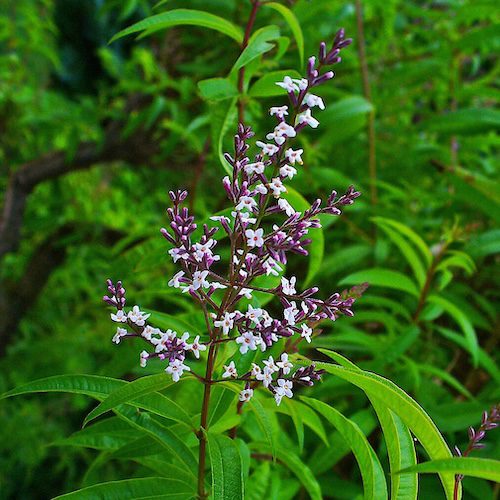
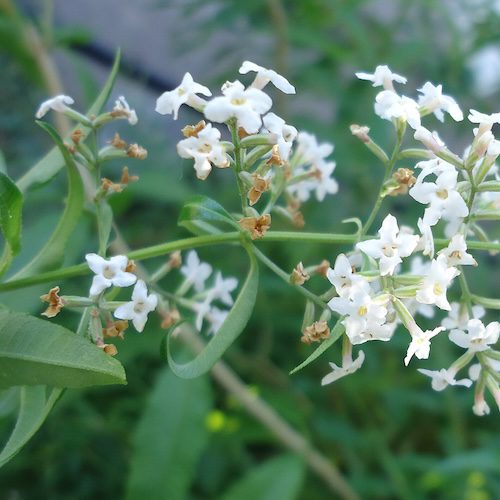
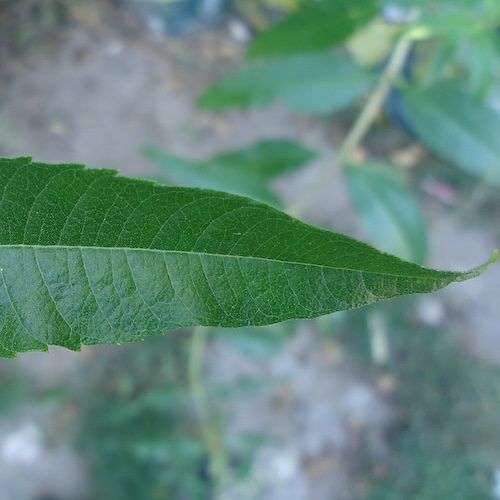
Botanical name:
Aloysia citrodora Paláu (also Aloysia citriodora, Lippia citriodora)
Alternative names:
Lemon verbena, cedrón, hierba luisa, verbena de Indias
Main indications:
lemon-scented digestive tea
rest and nerves, in folk use
THIS PLANT IS PART OF THE HOJAS DEL ESPÍRITU ANACONDA AND TAPIR VERDE HERBAL FORMULAS.
Short characteristics:
Hierba luisa, on this page, is Aloysia citrodora — lemon verbena, cedrón. A South American Verbenaceae shrub with a lemon-oil leaf. It is not lemongrass (Cymbopogon citratus), a tropical grass. Shops mix the names; the plants do not.
People drink the leaf for digestion and for a calmer evening. That is tea-plant use. It is not an Amazonian endemic, not a fever drug, and not a treatment for asthma, insomnia as a diagnosis, or infection.
The usual way of use:
Infusion of dried leaf, 5–10 minutes, evening or after food. Do not confuse the bottle with lemongrass oil. Essential oil is a concentrated fragrance product, not a cup of tea, and not something to swallow by the dropper as a “cleanse.”
Composition
The leaf smells of citral because the oil is rich in geranial and neral, often with limonene. The non-volatile fraction that reviews keep returning to is verbascoside (acteoside) and related phenylethanoid glycosides, plus flavonoids. That is lemon-verbena chemistry. Lemongrass is a different oil in a different family.
- Citral (geranial + neral) and limonene: the lemon scent of the leaf oil.
- Verbascoside: the phenylethanoid most often quantified in extracts.
- Not Cymbopogon: if the packet says hierba luisa but the plant is a grass, you bought lemongrass.
Traditional Use
Spanish colonial and South American household use is a lemon tea for the stomach and for rest. The plant is grown far beyond its South American origin. In the Andes and on the coast you will meet “cedrón” as a table tea. That is not ayahuasca, and it is not a jungle dieta plant.
- Digestive tea: after meals, for crampy or heavy stomachs in folk talk.
- Evening tea: nerves and sleep as household language, not as a hypnotic drug.
Precautions and Possible Interactions with Medicines
Tea is widely used as a food flavor. The essential oil is stronger stuff.
- Citral allergy and fragrance sensitization: known for concentrated oil; less of an issue in a cup of leaf.
- Kidney disease: some European monographs have urged caution with long, strong use. There is no large modern safety trial.
- Sedatives: a calming tea is still a CNS-active habit if you stack it with real sedatives. Use common sense.
- Pregnancy: food-tea amounts only; skip the oil.
Available Scientific Studies
Two papers on the right species. If a citation talks about Cymbopogon, it is the wrong plant.
“Aloysia citrodora Paláu (Lemon verbena): A review of phytochemistry and pharmacology”
Authors: Bahramsoltani R, Rostamiasrabadi P, Shahpiri Z, Marques AM, Rahimi R, Farzaei MH (2018)
Overview: Journal of Ethnopharmacology review of lemon verbena: citral-type oil, verbascoside, and preclinical pharmacology for antioxidant, antimicrobial, and anxiolytic-type findings. A species review, not a human insomnia trial.
Link: https://pubmed.ncbi.nlm.nih.gov/29698776/“Volatile Compounds and Biological Activity of the Essential Oil of Aloysia citrodora Paláu: Comparison of Hydrodistillation and Microwave-Assisted Hydrodistillation”
Authors: Sprea RM, Fernandes LHM, Pires TCSP, Calhelha RC, Rodrigues PJ, Amaral JS (2023)
Overview: Oil from the correct species: geranial and neral dominate; extraction method shifts the profile and in-vitro antioxidant, antibacterial, and cell-assay results. Essential-oil chemistry. Not a cup-of-tea clinical study.
Link: https://pmc.ncbi.nlm.nih.gov/articles/PMC10254266/